Artificial intelligence is fundamentally transforming education by introducing personalized AI tutors and intelligent assessment systems that adapt to each student’s unique learning journey.

The traditional one-size-fits-all approach to education has long struggled to meet the diverse needs of individual learners. Students progress at different paces, possess varying strengths and weaknesses, and respond to distinct teaching methodologies. This inherent challenge in conventional classrooms has created gaps in understanding, disengagement, and limited potential for countless learners worldwide.
Today’s educational landscape is witnessing a remarkable transformation driven by artificial intelligence technologies. AI tutors and smart assessment tools are bridging these gaps, offering personalized learning experiences that were once impossible to achieve at scale. These innovations are not replacing human teachers but rather empowering them with powerful tools to better serve their students and unlock potential that traditional methods often leave untapped.
🎓 The Evolution from Traditional to Intelligent Learning Systems
Traditional education has relied on periodic testing, standardized curricula, and teacher observation to gauge student progress. While effective to some degree, this approach presents significant limitations. Teachers managing classrooms of 20-30 students cannot possibly provide individualized attention to each learner’s specific challenges and learning style.
The emergence of AI-powered educational technology represents a paradigm shift in how we approach teaching and assessment. These systems leverage machine learning algorithms, natural language processing, and data analytics to create adaptive learning environments that respond in real-time to student performance and engagement patterns.
Unlike static educational software of the past, modern AI tutors continuously learn from interactions, refining their teaching strategies based on what works best for each individual student. This dynamic approach creates a personalized educational experience that scales efficiently across thousands of learners simultaneously.
Understanding AI Tutors: Your Personal Learning Companion 🤖
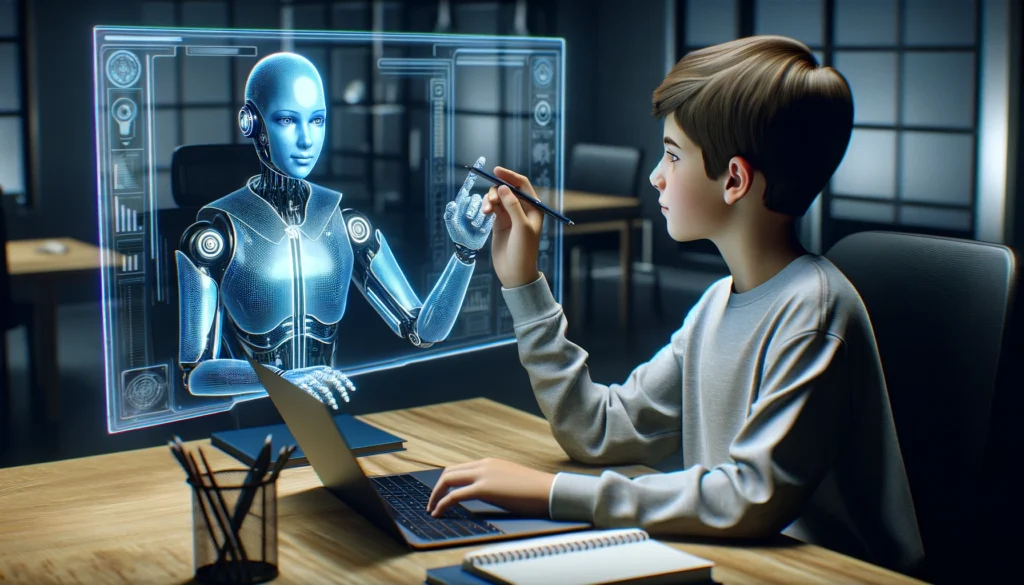
AI tutors function as intelligent virtual assistants dedicated to facilitating individual learning journeys. These systems combine sophisticated algorithms with educational pedagogy to deliver instruction, answer questions, and provide guidance tailored to each student’s current knowledge level and learning preferences.
The core strength of AI tutoring systems lies in their ability to analyze vast amounts of data about how students learn. By tracking response times, error patterns, topic engagement, and progress velocity, these systems build comprehensive learner profiles that inform every subsequent interaction.
When a student struggles with a particular concept, an AI tutor can identify the precise knowledge gap and present alternative explanations, analogies, or practice problems specifically designed to address that weakness. This targeted intervention happens immediately, preventing small misunderstandings from snowballing into fundamental comprehension problems.
Key Capabilities of Modern AI Tutoring Systems
Today’s AI tutors offer an impressive array of capabilities that extend far beyond simple question-and-answer functionality. They can engage in natural language conversations, making the learning experience feel more human and less robotic. Students can ask questions in their own words rather than navigating rigid menu systems or predetermined lesson paths.
Adaptive content delivery represents another critical feature. As students demonstrate mastery of foundational concepts, the AI automatically introduces more challenging material. Conversely, when learners struggle, the system provides additional practice and alternative explanations without judgment or stigma.
Many AI tutoring platforms now incorporate multimodal learning approaches, presenting information through text, images, videos, interactive simulations, and audio explanations. This variety accommodates different learning preferences and helps reinforce concepts through multiple sensory channels.
Smart Assessment: Beyond Traditional Testing Methods 📊
Assessment has traditionally served two primary functions: measuring what students have learned and identifying areas requiring additional instruction. However, conventional testing methods often fall short of these goals, providing only periodic snapshots of student knowledge rather than continuous, comprehensive insights.
Smart assessment systems powered by artificial intelligence fundamentally reimagine evaluation in education. Rather than relying solely on high-stakes exams administered at predetermined intervals, these platforms conduct ongoing formative assessments that provide real-time feedback to both students and educators.
This continuous evaluation approach offers significant advantages. Teachers gain immediate visibility into student comprehension, allowing them to adjust instruction before entire classes fall behind. Students receive prompt feedback on their work, enabling them to correct misunderstandings while the material remains fresh in their minds.
Formative Assessment in Real-Time
Intelligent assessment tools monitor student interactions throughout the learning process, not just during formal testing periods. Every practice problem, quiz question, and interactive exercise becomes an opportunity to gather data about student understanding and learning patterns.
These systems employ sophisticated algorithms to distinguish between careless errors, partial understanding, and fundamental misconceptions. This nuanced analysis enables more targeted interventions than traditional right-or-wrong grading schemes provide.
Machine learning models can also predict future performance based on current data patterns. By identifying students at risk of falling behind before they actually do, educators can implement proactive support measures rather than reactive remediation after failure has already occurred.
Personalization at Scale: The Game-Changing Advantage 🎯
Perhaps the most revolutionary aspect of AI-powered educational technology is its ability to deliver truly personalized learning experiences to unlimited numbers of students simultaneously. This capability addresses one of education’s most persistent challenges: providing individualized instruction within the constraints of traditional classroom structures.
Each student using an AI tutoring system effectively receives a private tutor that never tires, never loses patience, and maintains complete availability. The system adapts its teaching approach based on that specific learner’s progress, preferences, and performance patterns.
This personalization extends beyond simply adjusting difficulty levels. Advanced AI tutors modify their communication style, select examples relevant to individual student interests, and even adjust pacing to match each learner’s optimal engagement rhythm. Some systems incorporate gamification elements for students who respond well to competitive challenges, while offering more collaborative approaches to those who prefer cooperative learning.
Addressing Diverse Learning Needs
AI-powered educational tools demonstrate particular promise in supporting students with special learning needs. Learners with dyslexia, ADHD, autism spectrum disorders, or other conditions often require specialized instructional approaches that overwhelmed teachers struggle to provide consistently.
Intelligent tutoring systems can be configured to accommodate these diverse needs automatically. Text-to-speech functionality assists students with reading difficulties. Attention management features help maintain focus for learners with concentration challenges. Visual organization tools support students who process information differently.
Importantly, these accommodations happen seamlessly within the learning platform, reducing the stigma some students feel when receiving different materials or support than their peers. Every student receives a customized experience, making individualized support feel like the norm rather than the exception.
Data-Driven Insights for Educators 📈
While AI tutors directly support student learning, the data these systems generate provides invaluable insights for human educators. Comprehensive analytics dashboards reveal patterns across entire classes, highlighting topics where multiple students struggle or teaching approaches that yield particularly strong results.
Teachers can identify which concepts require additional classroom instruction, which students need one-on-one support, and which learners might benefit from enrichment activities. This intelligence enables more strategic allocation of limited human attention and instructional time.
The data also supports evidence-based reflection on teaching practices. Educators can experiment with different instructional approaches and measure their effectiveness through objective performance metrics rather than subjective impressions alone.
Actionable Intelligence for Intervention
Smart assessment platforms provide early warning systems that alert teachers to students showing signs of disengagement or comprehension difficulties. These alerts include specific diagnostic information about the nature of the student’s challenges, enabling targeted interventions rather than generic additional support.
Historical data comparisons allow educators to identify which interventions proved most effective for students with similar learning profiles in the past. This evidence base continuously grows, creating an increasingly sophisticated knowledge repository about what works for whom under which circumstances.
Overcoming Implementation Challenges and Concerns 🔧
Despite their tremendous potential, AI tutoring and assessment systems face legitimate implementation challenges and concerns that educators, parents, and policymakers must address thoughtfully.
Privacy and data security represent primary concerns. Educational AI systems collect extensive information about student performance, behavior patterns, and learning characteristics. Ensuring this sensitive data remains secure and is used ethically requires robust governance frameworks and technical safeguards.
Equity and access present another significant challenge. The benefits of AI-powered education cannot accrue only to students in well-resourced schools or affluent communities. Bridging the digital divide and ensuring universal access to these transformative technologies must remain a priority as adoption expands.
The Irreplaceable Human Element
Perhaps the most important consideration in educational AI implementation is maintaining the central role of human teachers. AI tutors and smart assessment tools are powerful supplements to human instruction, not replacements for it.
Teachers provide motivation, emotional support, mentorship, and social connection that no algorithm can replicate. They model critical thinking, demonstrate real-world problem-solving, and inspire passion for learning through their own enthusiasm and expertise.
The most effective educational technology implementations position AI as a tool that amplifies teacher effectiveness rather than substitutes for human instruction. By handling routine instructional tasks and providing detailed performance data, these systems free teachers to focus on the uniquely human aspects of education that create the most lasting impact.
Real-World Success Stories and Research Evidence 🌟
Empirical research and practical implementation case studies increasingly demonstrate the positive impact of AI tutoring and smart assessment on student outcomes. Multiple studies have documented significant learning gains when students use intelligent tutoring systems as supplements to traditional instruction.
Research published in educational technology journals shows that students using AI tutors typically learn material in substantially less time than those receiving only conventional instruction. Moreover, retention rates and the ability to apply learned concepts to new contexts often improve markedly with AI-supported learning.
Schools implementing smart assessment systems report improved early identification of struggling students, more efficient use of teacher time, and better alignment between instruction and student needs. These improvements translate into measurable gains in standardized test scores, course completion rates, and student engagement metrics.
Global Education Equity Potential
Beyond individual student benefits, AI-powered educational technology offers transformative potential for global education equity. In regions with severe teacher shortages or limited access to quality instruction, AI tutors can provide consistent, high-quality educational experiences previously unavailable.
Multilingual capabilities enable AI tutoring systems to support students in their native languages while helping them develop proficiency in additional languages. This functionality proves particularly valuable in linguistically diverse communities where finding qualified teachers for every language represents a significant challenge.
As these technologies mature and become more accessible, they could help millions of learners worldwide access educational opportunities that would otherwise remain out of reach due to geographic, economic, or social barriers.
The Future Landscape of AI-Enhanced Education 🚀
Current AI tutoring and assessment technologies represent only the beginning of what’s possible. Emerging developments promise even more sophisticated and effective educational applications in the coming years.
Advanced natural language processing will enable AI tutors to engage in increasingly nuanced educational conversations, understanding context, emotion, and subtle learning indicators that current systems sometimes miss. Virtual and augmented reality integration will create immersive learning experiences that make abstract concepts tangible and memorable.
Emotional intelligence capabilities will allow future AI tutors to recognize frustration, confusion, or disengagement in real-time and adjust their approach accordingly. These systems might detect when a student needs encouragement, when they’re ready for a challenge, or when they require a break to maintain optimal learning conditions.
Collaborative AI systems will facilitate more effective peer learning by intelligently grouping students with complementary strengths and weaknesses, providing scaffolding for productive group work, and ensuring all participants contribute meaningfully to collective learning goals.
Preparing for the AI-Enhanced Educational Future 💡
Maximizing the benefits of AI tutoring and smart assessment requires thoughtful preparation from all education stakeholders. Educators need professional development to effectively integrate these tools into their teaching practice and interpret the data they generate.
School administrators must invest in necessary infrastructure while establishing policies that protect student privacy and promote equitable access. Parents should develop understanding of how these technologies work and how they can support their children’s AI-enhanced learning experiences at home.
Students themselves need guidance in developing productive relationships with AI tutors, understanding these tools as learning supports rather than shortcuts that bypass genuine intellectual effort. Digital literacy education must evolve to include critical thinking about AI systems and their appropriate use in learning contexts.
The revolution in learning powered by AI tutors and smart assessment is well underway, transforming education from a standardized, one-size-fits-all model into a personalized, adaptive, and remarkably effective system. These technologies are unlocking potential in learners of all ages and backgrounds, providing support that was once impossible to deliver at scale. As we continue refining and expanding these tools, we move closer to an educational ideal where every student receives precisely the instruction they need, when they need it, delivered in ways that resonate with their unique learning profile. The future of education is not about replacing human teachers with machines—it’s about empowering educators with intelligent tools that help them achieve what they’ve always aspired to do: unlock the full potential within every student they serve.