Self-regulated learning is the cornerstone of personal and professional achievement, empowering individuals to take control of their educational journey and unlock their fullest potential.

In today’s rapidly evolving world, the ability to learn independently and effectively has become more critical than ever. Whether you’re a student navigating academic challenges, a professional seeking career advancement, or someone committed to lifelong learning, mastering self-regulated learning behaviors can dramatically transform your success trajectory. This comprehensive guide will explore the essential components of self-regulated learning and provide actionable strategies to help you become a more autonomous, efficient, and successful learner.
🧠 Understanding the Foundation of Self-Regulated Learning
Self-regulated learning (SRL) refers to the process by which learners actively direct their own learning experiences through goal-setting, strategy selection, self-monitoring, and reflection. Unlike passive learning approaches where knowledge is simply transmitted from teacher to student, self-regulated learning places you in the driver’s seat of your educational journey.
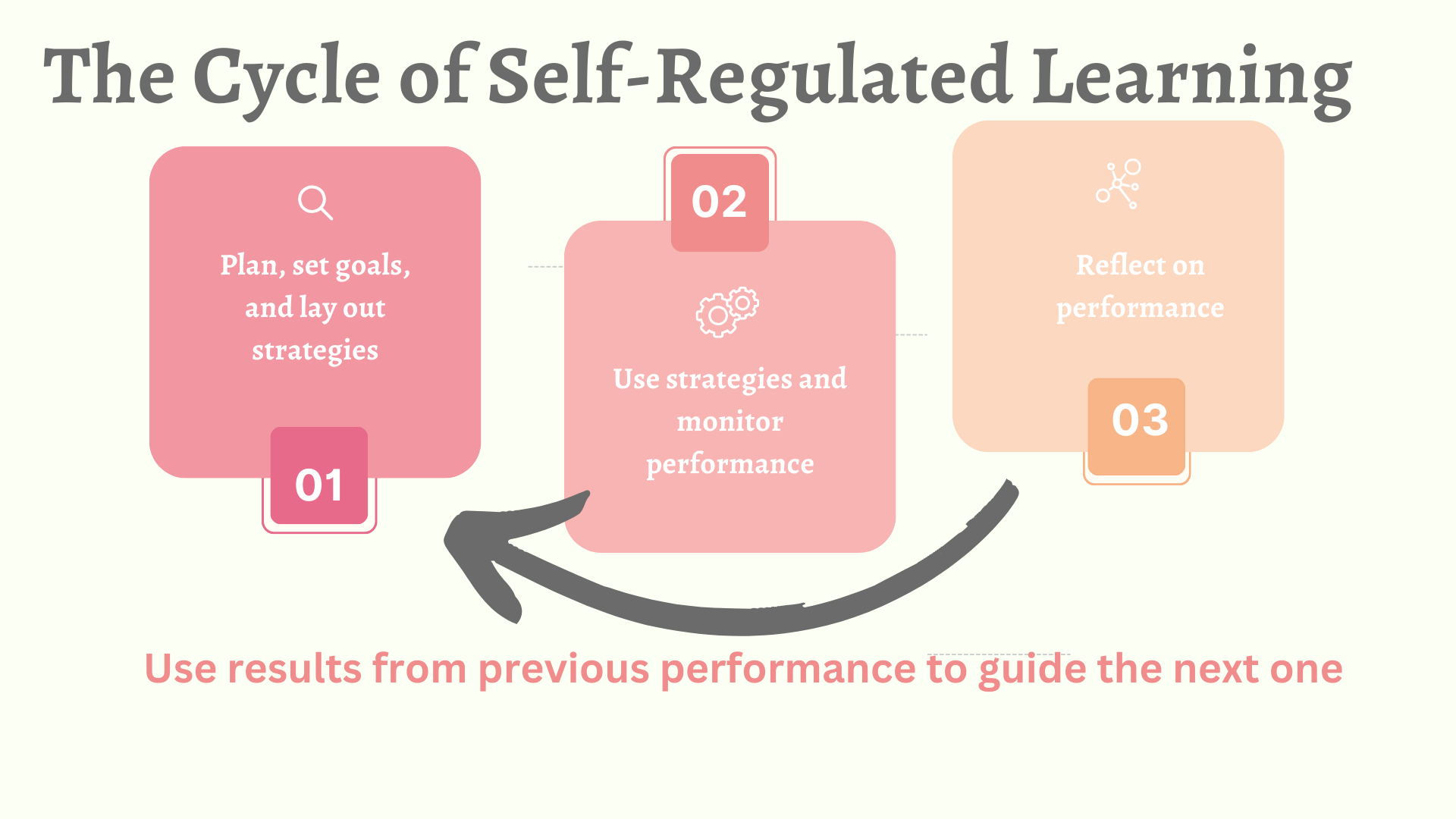
At its core, self-regulated learning involves three interconnected phases: the forethought phase, where you set goals and plan strategies; the performance phase, where you execute your learning plan while monitoring your progress; and the self-reflection phase, where you evaluate outcomes and adjust your approach accordingly. This cyclical process creates a continuous improvement loop that enhances learning effectiveness over time.
Research consistently demonstrates that individuals who develop strong self-regulated learning skills achieve higher academic performance, demonstrate greater motivation, and experience increased confidence in their abilities. These benefits extend far beyond the classroom, influencing career success, personal development, and overall life satisfaction.
The Psychology Behind Effective Self-Direction 💡
Understanding the psychological mechanisms underlying self-regulated learning provides valuable insights into how we can optimize our learning behaviors. Metacognition—thinking about thinking—plays a central role in this process. When you develop metacognitive awareness, you become conscious of your learning strategies, recognize when they’re working or failing, and adjust accordingly.
Motivation serves as the fuel that powers self-regulated learning. Intrinsic motivation, driven by genuine interest and curiosity, tends to produce more sustainable learning behaviors than extrinsic motivation based solely on rewards or avoiding punishment. Cultivating intrinsic motivation requires connecting learning activities to personal values, interests, and long-term goals.
Self-efficacy—your belief in your ability to succeed—significantly influences your willingness to engage in self-regulated learning behaviors. When you believe you can master challenging material through effort and appropriate strategies, you’re more likely to persist through difficulties and ultimately succeed.
Building a Growth Mindset for Learning Success
Carol Dweck’s research on mindset reveals that individuals with a growth mindset—those who believe abilities can be developed through dedication and hard work—demonstrate stronger self-regulated learning behaviors than those with fixed mindsets. Embracing a growth mindset means viewing challenges as opportunities, treating failures as learning experiences, and understanding that effort is the path to mastery.
To cultivate a growth mindset, regularly challenge negative self-talk, celebrate progress rather than just outcomes, and reframe setbacks as valuable feedback. This mental shift creates the psychological foundation necessary for sustained self-regulated learning.
🎯 Strategic Goal-Setting: Your Learning Roadmap
Effective self-regulated learning begins with clear, well-defined goals. Vague aspirations like “get better at math” lack the specificity needed to guide learning behaviors. Instead, employ the SMART framework to create goals that are Specific, Measurable, Achievable, Relevant, and Time-bound.
For example, rather than “improve my writing skills,” a SMART goal would be: “Write 500 words daily for the next 30 days to develop my descriptive writing abilities.” This precision provides clear direction and enables you to track progress effectively.
Break larger goals into smaller milestones that create momentum and provide regular opportunities for success. This approach prevents overwhelm and maintains motivation throughout extended learning journeys. Each completed milestone reinforces your self-efficacy and encourages continued effort.
Aligning Learning Goals with Personal Values
The most powerful learning goals connect to your deeper values and long-term vision. When you understand why a particular skill or knowledge matters to you personally, motivation becomes self-sustaining. Regularly reflect on how your learning objectives support your broader life goals and aspirations.
Mastering Time Management and Study Scheduling ⏰
Time management represents a critical self-regulated learning behavior that separates high achievers from those who struggle. Effective learners don’t simply find time for learning—they deliberately create it through strategic planning and prioritization.
Begin by conducting a time audit to understand how you currently spend your hours. Identify time-wasters and low-value activities that could be redirected toward learning. Then, design a realistic study schedule that accounts for your energy levels, competing commitments, and learning preferences.
The Pomodoro Technique—working in focused 25-minute intervals followed by short breaks—has proven remarkably effective for maintaining concentration and preventing burnout. This approach leverages our brain’s natural attention cycles while building stamina for extended learning sessions.
Creating Your Optimal Learning Environment
Your physical and digital environments significantly impact learning effectiveness. Designate a specific study space that signals to your brain it’s time to focus. Minimize distractions by silencing notifications, using website blockers during study sessions, and communicating boundaries to those around you.
Consider environmental factors like lighting, temperature, and background noise. Some learners thrive in complete silence, while others benefit from ambient sounds or instrumental music. Experiment to discover what works best for you.
📚 Selecting and Applying Effective Learning Strategies
Self-regulated learners maintain a diverse toolkit of learning strategies and know when to apply each technique. Different learning objectives require different approaches, and strategy selection should align with your goals and the nature of the material.
Active learning strategies—those requiring mental effort and engagement—consistently outperform passive approaches like highlighting or rereading. Effective techniques include:
- Retrieval Practice: Actively recalling information from memory strengthens neural pathways and improves long-term retention
- Spaced Repetition: Reviewing material at increasing intervals combats forgetting and consolidates knowledge
- Elaboration: Connecting new information to existing knowledge creates meaningful associations
- Interleaving: Mixing different topics or problem types during study sessions enhances discrimination and application abilities
- Self-Explanation: Articulating your understanding in your own words reveals gaps and deepens comprehension
Technology offers powerful tools to support these strategies. Flashcard apps leverage spaced repetition algorithms to optimize review timing, while note-taking applications enable organization and elaboration of learning materials.
The Power of Teaching Others
One of the most effective learning strategies is teaching concepts to others. The process of organizing information for presentation, anticipating questions, and explaining ideas in accessible language dramatically deepens your understanding. Seek opportunities to share your knowledge through study groups, mentoring, or even explaining concepts to imaginary audiences.
Monitoring Progress and Maintaining Motivation 📊
Self-monitoring—regularly assessing your progress toward goals—keeps you on track and enables timely adjustments. Establish concrete metrics for measuring advancement, whether through practice test scores, project completions, or skill demonstrations.
Maintain a learning journal to document progress, challenges, and insights. This practice builds metacognitive awareness and provides valuable data for evaluating strategy effectiveness. Regular journaling also helps identify patterns in your learning behaviors and emotional states that influence performance.
Celebrate milestones and acknowledge progress, regardless of how small. Positive reinforcement strengthens learning behaviors and maintains motivation during challenging periods. Create reward systems that recognize effort and improvement, not just final outcomes.
Overcoming Motivation Slumps
Even the most dedicated self-regulated learners experience motivation fluctuations. When enthusiasm wanes, return to your “why”—the personal reasons driving your learning goals. Revisit your values, envision your desired future, and reconnect with the intrinsic motivations that initiated your journey.
Vary your learning activities to prevent boredom. Alternate between different study techniques, subjects, or formats. Sometimes a simple change in approach can reignite engagement and curiosity.
🔍 Developing Critical Self-Reflection Habits
The self-reflection phase distinguishes truly effective self-regulated learners from those who simply go through the motions. Regular reflection transforms experience into wisdom by identifying what works, what doesn’t, and why.
After completing learning sessions or achieving milestones, ask yourself targeted reflection questions: What strategies proved most effective? Where did I struggle, and why? What would I do differently next time? How does this new knowledge connect to my existing understanding? What questions remain unanswered?
This systematic reflection develops metacognitive skills and creates an adaptive learning system that continuously improves. Rather than repeating ineffective strategies, you evolve your approach based on evidence of what produces results.
Learning From Setbacks and Mistakes
Mistakes represent invaluable learning opportunities rather than failures. When you encounter difficulties or perform below expectations, resist the temptation toward self-criticism. Instead, adopt a curious, analytical stance: What can this experience teach me? Which specific skills or knowledge gaps need attention? What adjustments will improve future performance?
This constructive approach to setbacks builds resilience and maintains the psychological safety necessary for taking the learning risks that lead to growth.
Leveraging Technology for Enhanced Self-Regulation 📱
Modern technology offers unprecedented tools for supporting self-regulated learning behaviors. Digital applications can assist with goal-setting, time management, strategy implementation, progress tracking, and reflection.
Productivity apps help structure your learning schedule and maintain accountability. Note-taking applications enable sophisticated organization and retrieval of learning materials. Specialized learning platforms provide adaptive practice and immediate feedback.
However, technology should enhance rather than replace fundamental self-regulated learning processes. The most effective approach combines technological tools with core metacognitive practices, using apps to support your learning system rather than defining it.
Building Sustainable Learning Habits for Lifelong Success 🌱
The ultimate goal of mastering self-regulated learning behaviors isn’t completing a single course or achieving one objective—it’s developing sustainable habits that support lifelong learning and continuous growth.
Habit formation research suggests that consistency matters more than intensity. Better to study 30 minutes daily than to cram for three hours once weekly. Regular, modest efforts compound over time, producing remarkable results while building learning as a natural part of your daily routine.
Start small when establishing new self-regulated learning behaviors. Choose one strategy or habit to implement consistently before adding others. This incremental approach prevents overwhelm and allows each behavior to become automatic before introducing additional changes.
Creating Accountability Systems
External accountability structures support internal self-regulation, particularly when establishing new habits. Share your learning goals with trusted friends, join study groups, or find an accountability partner with similar objectives. Social commitment increases follow-through and provides encouragement during challenging periods.
Consider working with a mentor or coach who can provide guidance, feedback, and support. Their external perspective often reveals blind spots and suggests improvements you might not recognize independently.
Adapting Self-Regulated Learning Across Different Contexts 🌍
While core self-regulated learning principles remain consistent, their application varies across different learning contexts. Academic learning requires different strategic emphases than professional skill development or personal enrichment pursuits.
In formal educational settings, coordinate your self-regulated learning behaviors with course requirements and instructor expectations. Identify how assignments, readings, and assessments connect to your broader learning goals. Use course structures as frameworks while extending beyond minimum requirements through self-directed exploration.
Professional learning often demands greater autonomy in identifying what to learn and how to acquire necessary skills. Conduct thorough needs assessments, seek feedback from colleagues and supervisors, and align learning objectives with career goals and organizational needs.
Personal learning pursuits offer maximum freedom but require strong intrinsic motivation and self-direction. Clearly define what mastery looks like in your chosen area, establish milestones for tracking progress, and create structures that maintain momentum without external deadlines or accountability.
Transforming Challenges Into Opportunities for Growth 💪
The journey toward mastering self-regulated learning behaviors inevitably includes challenges, setbacks, and moments of doubt. These difficulties aren’t obstacles to success—they’re essential components of the learning process that build resilience and deepen understanding.
When facing particularly challenging material or skills, resist the urge to give up or seek easier alternatives. Instead, employ problem-solving strategies: break the challenge into smaller components, seek additional resources or perspectives, adjust your approach based on what isn’t working, and persist with deliberate practice.
Remember that struggle indicates learning is occurring. If everything feels easy and comfortable, you’re likely working within your existing capabilities rather than expanding them. Productive struggle—challenging yourself while maintaining reasonable expectations—creates the conditions for genuine growth.
Your Personalized Self-Regulated Learning System ✨
Ultimately, effective self-regulated learning isn’t about rigidly following prescribed methods—it’s about developing a personalized system that aligns with your unique learning preferences, goals, and circumstances. The strategies and principles outlined in this article provide a foundation, but you must adapt them to create an approach that works specifically for you.
Experiment with different techniques, monitor what produces results, and continuously refine your system based on evidence and reflection. What works brilliantly for others might not suit your learning style, and that’s perfectly fine. Your goal is optimization for your individual needs, not conformity to someone else’s ideal.
Start today by selecting one self-regulated learning behavior to implement. Perhaps it’s setting a SMART goal for the week, trying retrieval practice instead of rereading, or establishing a daily reflection routine. Small, consistent actions accumulate into transformative results over time.
The ability to direct your own learning effectively represents one of the most valuable skills you can develop. It transcends specific subjects or domains, providing a meta-skill that enhances every area of life. By mastering self-regulated learning behaviors, you unlock your potential not just for immediate success, but for lifelong growth, adaptation, and achievement. Your learning journey is uniquely yours—take control of it with intention, strategy, and confidence in your capacity to grow.