Digital learning has transformed education, but success requires more than logging in and watching videos. It demands self-awareness, strategic thinking, and the ability to monitor your own learning process—skills collectively known as metacognition.

🧠 Understanding Metacognition in the Digital Age
Metacognition refers to “thinking about thinking”—the conscious awareness of your own cognitive processes. In digital learning environments, this skill becomes even more critical as you navigate self-paced courses, manage distractions, and take responsibility for your educational outcomes without traditional classroom structures.
When you engage in metacognitive practices, you’re not just absorbing information passively. Instead, you’re actively evaluating your understanding, identifying gaps in knowledge, and adjusting your learning strategies accordingly. This higher-order thinking distinguishes successful digital learners from those who struggle to maintain momentum and retain information.
Research consistently shows that students who employ metacognitive strategies outperform their peers academically. They demonstrate better problem-solving abilities, improved memory retention, and greater adaptability when facing complex learning challenges. In online environments where immediate feedback from instructors may be limited, these self-regulatory skills become your most valuable asset.
The Three Pillars of Metacognitive Awareness
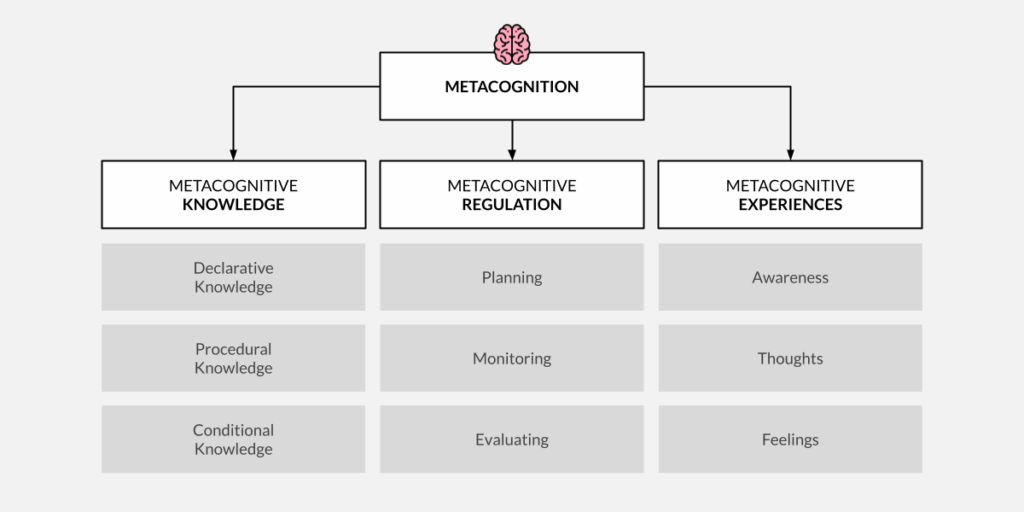
Effective metacognition rests on three foundational components that work together to enhance your learning experience. Understanding these pillars helps you develop a comprehensive approach to mastering digital educational content.
Planning: Setting the Stage for Success
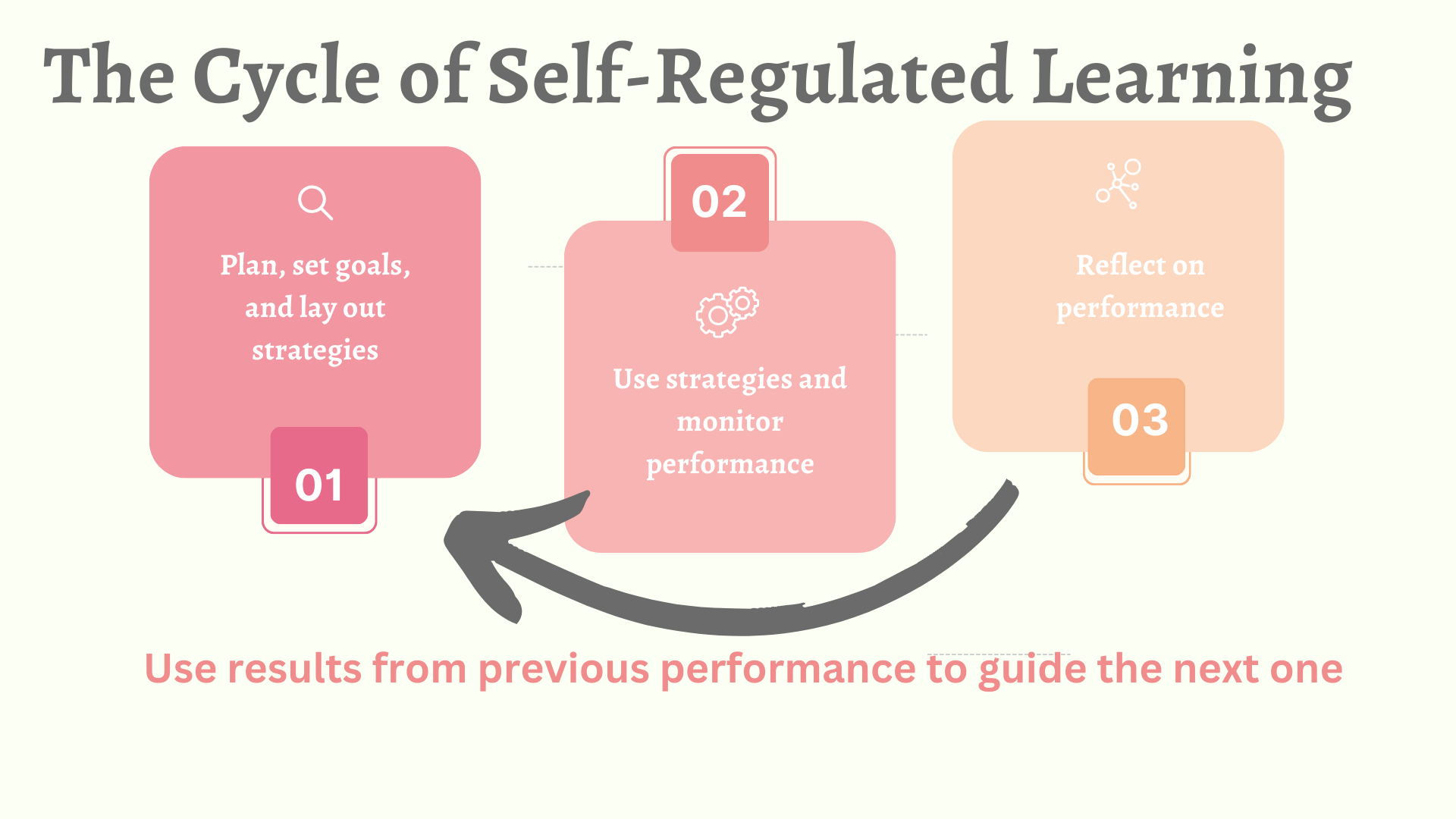
Before diving into new material, successful digital learners engage in deliberate planning. This involves setting clear learning objectives, allocating appropriate time for study sessions, and identifying the resources you’ll need. Ask yourself: What do I already know about this topic? What specific outcomes do I want to achieve? How will I measure my progress?
Planning also means creating an optimal learning environment. In digital settings, this includes minimizing digital distractions, preparing necessary tools or applications, and establishing a consistent study routine. The physical and digital spaces you inhabit significantly impact your cognitive performance and ability to concentrate.
Monitoring: Real-Time Learning Assessment
As you progress through digital content, continuous self-monitoring keeps you on track. This means regularly checking your comprehension, recognizing when you’ve drifted off-task, and noticing patterns in your attention and engagement levels. Effective monitoring involves asking reflective questions throughout your learning session.
Digital learners should pause periodically to assess understanding. Can you explain the concept in your own words? Are there connections to previous knowledge? If you’re watching a video lecture, can you predict what comes next based on your current understanding? These mental check-ins prevent the illusion of learning—that dangerous state where you feel like you’re absorbing information but actually aren’t retaining much.
Evaluating: Measuring Progress and Adjusting Strategies
After completing a learning session or module, evaluation determines what worked and what didn’t. This retrospective analysis helps you refine your approach for future study sessions. Consider which strategies enhanced understanding, where confusion persisted, and how efficiently you used your time.
Honest self-evaluation requires objectivity and the willingness to confront areas of weakness. Many digital learners fall into the trap of passive consumption—completing videos or readings without truly testing their knowledge. Building evaluation checkpoints into your routine ensures genuine learning occurs rather than superficial exposure to material.
🎯 Practical Metacognitive Strategies for Digital Learning
Translating metacognitive awareness into actionable strategies transforms your approach to online education. These evidence-based techniques help you extract maximum value from digital learning experiences.
The Self-Questioning Technique
Develop the habit of questioning yourself before, during, and after learning sessions. Create a personal question bank that includes: What’s the main idea here? How does this relate to what I learned yesterday? What would I do differently if I encountered this problem again? Why does this concept matter in the broader context?
Self-questioning activates deeper cognitive processing and prevents your brain from defaulting to passive reception mode. When watching instructional videos, pause regularly to quiz yourself on key points. If you can’t answer your own questions, you’ve identified gaps that need attention before moving forward.
Digital Note-Taking with Metacognitive Annotations
Transform note-taking from transcription into an active metacognitive process. Rather than simply copying information, add annotations that reflect your thinking process. Mark sections where you felt confused, note connections to other concepts, and include personal examples that illustrate abstract ideas.
Use visual signals in your digital notes—highlighting uncertain areas differently from mastered content, for instance. Many note-taking applications allow tagging systems that can track your confidence levels across different topics. This creates a metacognitive roadmap showing where to focus review efforts.
Learning Journals and Reflection Logs
Maintain a digital learning journal where you regularly reflect on your educational journey. After each study session, spend five minutes documenting what you learned, challenges encountered, and strategies that proved effective or ineffective. This practice externalizes your metacognitive process, making it visible and improvable.
Your reflection log serves multiple purposes: it reinforces learning through retrieval practice, creates a personal database of effective strategies, and reveals patterns in your learning behaviors over time. Review your journal weekly to identify recurring obstacles and track your growth as a self-directed learner.
Overcoming Common Metacognitive Barriers in Online Education
Digital learning environments present unique challenges that can interfere with metacognitive awareness. Recognizing these obstacles is the first step toward addressing them effectively.
The Distraction Dilemma
Digital devices offer infinite distraction possibilities, from social media notifications to entertainment platforms. These interruptions fragment attention and undermine the focused awareness necessary for metacognition. The solution isn’t eliminating technology but managing it strategically.
Implement browser extensions that block distracting websites during study sessions. Place your phone in another room or use app timers that limit access to non-educational applications. Create distinct user profiles on your device—one for learning and one for leisure—to establish clear psychological boundaries between different activities.
Illusion of Competence Through Recognition
Online learners often confuse recognition with recall. You might recognize information when you see it in a video or reading, creating a false sense of mastery. However, recognition requires far less cognitive effort than active recall—the ability to retrieve information from memory without prompts.
Combat this illusion by testing yourself without access to materials. Use flashcard applications, practice problems, or teach concepts to someone else. These activities reveal the true state of your knowledge and highlight areas requiring additional study. Embrace difficulty during practice; struggling to retrieve information actually strengthens memory pathways.
Passive Video Consumption
Video lectures dominate digital learning platforms, but watching passively delivers minimal educational benefit. Research shows that students who merely watch videos retain significantly less information than those who engage actively with the content.
Transform video consumption into active learning by taking strategic pauses. Stop the video every few minutes to summarize key points in your own words. Predict what the instructor will say next. Create questions that the remaining content should answer. Adjust playback speed based on content difficulty—slower for complex material requiring deep processing, faster for review content.
🚀 Advanced Metacognitive Techniques for Peak Performance
Once you’ve mastered foundational strategies, these advanced techniques can elevate your digital learning effectiveness to new heights.
Metacognitive Calibration
Calibration refers to the accuracy of your confidence judgments about your knowledge. Well-calibrated learners accurately assess what they know and don’t know, avoiding both overconfidence and underconfidence. Poor calibration leads to inefficient study—spending too much time on mastered material or too little on challenging concepts.
Improve calibration by making prediction judgments before testing yourself. Estimate your confidence level on specific topics, then compare those predictions against actual performance. Over time, you’ll develop more accurate self-assessment skills, allowing you to allocate study time more effectively based on genuine need rather than subjective feelings.
Interleaved Practice and Metacognitive Monitoring
Rather than studying one topic until mastery (blocked practice), interleave different subjects or problem types within a single session. This approach feels more difficult and can initially seem less effective, but research demonstrates superior long-term retention and transfer of knowledge.
Interleaving enhances metacognition by forcing you to discriminate between different concepts and select appropriate strategies for varied problems. It prevents the autopilot mode that develops when repeatedly practicing identical problem types. Monitor your performance across interleaved topics to identify which require additional focused attention.
Elaborative Interrogation
This powerful technique involves asking “why” and “how” questions about the material you’re learning. Rather than accepting facts at face value, dig deeper into underlying mechanisms, causes, and connections. Why does this principle work? How would outcomes change under different conditions? What assumptions underlie this theory?
Elaborative interrogation creates richer mental models and more robust memory traces. It forces you beyond surface-level understanding toward genuine expertise. This approach particularly benefits digital learners who might otherwise rush through content without adequate processing depth.
Building a Personalized Metacognitive System
Effective metacognition isn’t one-size-fits-all. Your optimal strategies depend on learning style, subject matter, educational goals, and personal circumstances. Developing a personalized system requires experimentation and ongoing refinement.
Conducting Personal Learning Experiments
Approach your education like a scientist studying a fascinating subject—yourself. Design small experiments testing different strategies: Does studying in shorter, more frequent sessions improve retention compared to longer marathon sessions? Do you comprehend better in morning or evening hours? Does background music enhance or impair concentration for different task types?
Track results systematically in your learning journal. Maintain consistency in variables you’re not testing to isolate the factor you’re investigating. Over several weeks, patterns will emerge revealing your unique learning profile. This empirical self-knowledge enables evidence-based decisions about your educational approach.
Creating Metacognitive Routines and Rituals
Consistency transforms metacognitive practices from occasional activities into ingrained habits. Develop specific routines around your learning sessions: a pre-study ritual that mentally prepares you for focused work, periodic checkpoints during study, and a post-session review protocol.
Rituals serve as external scaffolding for internal metacognitive processes. They reduce cognitive load by automating when and how you engage in reflective thinking, ensuring these practices occur even when motivation wanes. Over time, metacognitive awareness becomes automatic rather than effortful.
Technology Tools That Support Metacognitive Development
While technology can distract, properly selected applications enhance metacognitive awareness and self-regulated learning. Look for tools that provide feedback, enable reflection, and help visualize your learning progress.
Spaced repetition software adapts to your performance, identifying concepts requiring additional review based on your demonstrated knowledge. Time-tracking applications reveal how you actually spend study hours versus how you think you spend them, often exposing surprising discrepancies. Mind mapping tools help externalize connections between ideas, making your conceptual understanding visible and improvable.
Learning management systems often include analytics dashboards showing your engagement patterns, completion rates, and assessment performance over time. Regularly review these metrics with a metacognitive lens, asking what they reveal about your learning behaviors and where adjustments might improve outcomes.
💡 Metacognition as a Lifelong Learning Superpower
The metacognitive skills you develop for digital learning extend far beyond formal education. In rapidly changing professional landscapes, the ability to learn efficiently and adapt quickly becomes increasingly valuable. Metacognition isn’t just about academic success—it’s about developing the self-awareness and strategic thinking that define effective lifelong learners.
As artificial intelligence and automation transform the workforce, uniquely human capacities like metacognition, critical thinking, and adaptive learning become more important. These higher-order cognitive skills resist automation precisely because they involve conscious reflection on one’s own thinking—an essentially human capability.
Digital learning environments offer unprecedented access to knowledge and educational opportunities. However, access alone doesn’t guarantee learning. The difference between those who thrive in self-directed digital education and those who struggle often comes down to metacognitive awareness and strategic application of evidence-based learning techniques.
Implementing Your Metacognitive Action Plan
Knowledge without application produces no results. Transform these insights into tangible improvements by creating a specific implementation plan. Start small rather than attempting to overhaul your entire approach simultaneously. Select two or three strategies that resonate most strongly and commit to practicing them consistently for two weeks.
Monitor your experience during this trial period, noting what works well and what feels awkward or ineffective. Remember that new strategies often feel uncomfortable initially—discomfort doesn’t necessarily indicate ineffectiveness. Give techniques adequate time to become familiar before abandoning them.
After your initial trial period, evaluate results honestly. Did your comprehension improve? Do you feel more confident in your knowledge? Are you retaining information better? Based on these reflections, adjust your approach: continue effective strategies, modify those showing promise but needing refinement, and abandon techniques that clearly don’t suit your learning style.
Gradually expand your metacognitive toolkit as initial strategies become habitual. This incremental approach prevents overwhelm while building a comprehensive system of self-regulated learning practices. Over time, metacognition evolves from a conscious effort into an automatic way of approaching educational challenges.
🎓 Transforming Challenge Into Opportunity
Digital learning presents both challenges and extraordinary opportunities. The flexibility and accessibility that make online education appealing also require greater self-direction and personal responsibility. Metacognitive strategies bridge this gap, providing the self-regulatory skills necessary to maximize learning outcomes in digital environments.
Every challenge in digital learning—distraction, isolation, lack of immediate feedback—becomes manageable through metacognitive awareness. When you understand how you learn best, recognize when comprehension falters, and adjust strategies accordingly, you transform from a passive consumer of educational content into an active architect of your own expertise.
The investment you make in developing metacognitive skills pays dividends throughout your educational journey and professional career. These aren’t just techniques for passing courses—they’re fundamental capabilities for thriving in an information-rich world where learning never stops and adaptation determines success.
Start today. Choose one strategy from this article and implement it in your next learning session. Pay attention to your thinking processes. Question your understanding. Reflect on what works. Through consistent practice of metacognitive awareness, you’ll master not just specific content, but the learning process itself—the ultimate key to unlimited growth and achievement in digital learning and beyond.