The educational landscape is undergoing a profound transformation, driven by innovative teaching approaches that combine the best of traditional and digital learning environments. 🌍

As we navigate through an era of unprecedented technological advancement, the integration of hybrid and blended learning models has emerged as a powerful solution to address the diverse needs of modern learners. These approaches are not merely responses to recent global challenges, but rather strategic frameworks designed to enhance educational outcomes, increase accessibility, and prepare students for an increasingly digital future.
The shift toward these innovative learning models represents more than just a trend; it signifies a fundamental reimagining of how education can be delivered, experienced, and optimized. By thoughtfully combining face-to-face instruction with online learning components, educators are creating dynamic environments that foster engagement, personalization, and flexibility while maintaining the irreplaceable value of human connection and direct mentorship.
Understanding the Distinction: Hybrid vs. Blended Learning 📚
While often used interchangeably, hybrid and blended learning models have distinct characteristics that set them apart. Understanding these differences is crucial for educators, administrators, and policymakers seeking to implement the most effective approach for their specific contexts.
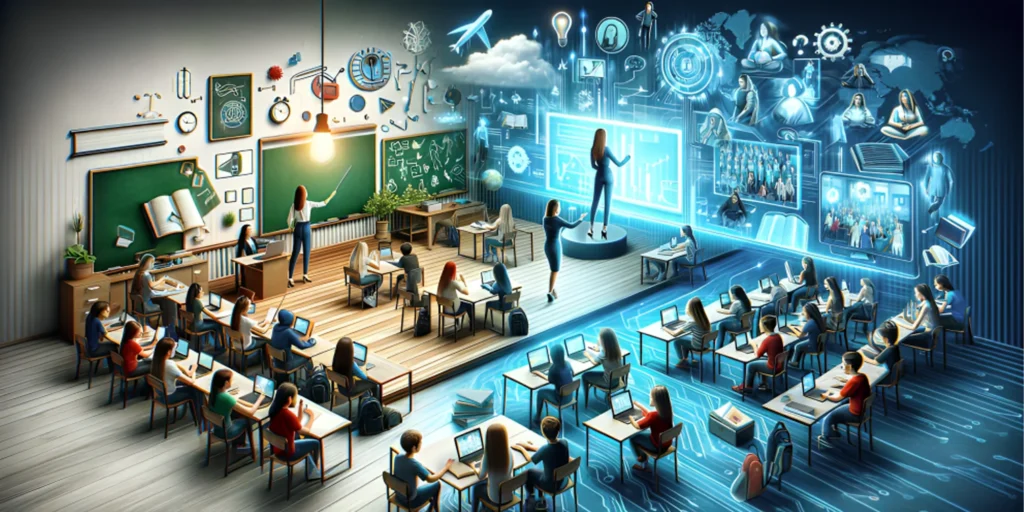
Blended learning typically refers to an educational approach where students engage with both online digital media and traditional face-to-face classroom methods in an integrated manner. The key characteristic is that all students participate in both modalities as part of a unified learning experience. The online and offline components are deliberately designed to complement each other, creating a cohesive educational journey.
Hybrid learning, on the other hand, offers more flexibility in how students access instruction. In a hybrid model, some students may attend in-person sessions while others participate remotely at the same time, or students may alternate between in-person and online attendance. This model provides choice and accommodates different learning preferences and circumstances.
The Core Components of Effective Blended Learning
Successful blended learning environments share several essential characteristics that distinguish them from simply adding technology to traditional classrooms:
- Intentional integration: Online and face-to-face elements are purposefully designed to work together, not exist as separate experiences
- Student agency: Learners have some control over time, place, path, or pace of their learning journey
- Personalized pathways: Instruction adapts to individual student needs, abilities, and interests
- Data-driven insights: Regular assessment and analytics inform instructional decisions
- Collaborative opportunities: Both virtual and physical spaces facilitate meaningful peer interaction
The Educational Advantages Transforming Student Outcomes 🎯
The implementation of hybrid and blended learning models has demonstrated remarkable benefits across diverse educational settings, from elementary schools to higher education institutions and corporate training environments.
Research consistently shows that students in well-designed blended learning programs often outperform their counterparts in traditional classroom-only settings. This improvement stems from several factors, including increased engagement through multimedia resources, opportunities for self-paced learning, and more frequent formative assessment opportunities.
Personalization at Scale
One of the most significant advantages of these models is their ability to deliver personalized learning experiences to large numbers of students simultaneously. Digital platforms can adapt content difficulty, provide targeted practice opportunities, and offer supplementary resources based on individual performance data—something virtually impossible for a single teacher managing a traditional classroom.
Students who struggle with particular concepts can access additional explanations, practice exercises, and alternative presentations of material without feeling singled out or falling behind their peers. Conversely, advanced learners can progress more rapidly through mastered content and engage with enrichment materials that challenge and stimulate their growth.
Developing Essential 21st-Century Skills
Beyond content mastery, hybrid and blended learning environments naturally cultivate critical competencies required for success in modern workplaces. Students develop digital literacy, self-direction, time management, and remote collaboration skills—all highly valued in contemporary professional contexts. These capabilities emerge organically as students navigate online platforms, manage their learning schedules, and engage with peers through digital communication tools.
Breaking Down Barriers to Educational Access 🌐
Perhaps one of the most socially significant impacts of hybrid and blended learning is their potential to democratize education by removing traditional barriers to access. Geographic isolation, physical disabilities, family responsibilities, and economic constraints have historically limited educational opportunities for countless individuals worldwide.
Students in rural areas can now access courses and expertise previously available only in major urban centers. Learners with mobility challenges can participate fully without the physical demands of daily campus navigation. Working adults can pursue educational advancement while maintaining employment and family commitments. International students can begin their education remotely before transitioning to in-person study.
This expanded access doesn’t simply benefit individual learners—it strengthens entire communities and economies by building a more educated, skilled workforce and fostering social mobility across traditionally underserved populations.
Technology Platforms Powering the Transformation 💻
The success of hybrid and blended learning models depends significantly on the technological infrastructure supporting them. Learning Management Systems (LMS) serve as the backbone of these environments, providing centralized platforms where content, assignments, assessments, and communication converge.
Popular LMS platforms like Canvas, Blackboard, Moodle, and Google Classroom offer varying features, but all facilitate the organization and delivery of learning materials, tracking of student progress, and communication between instructors and learners. These systems integrate with numerous specialized tools for video conferencing, collaborative document creation, assessment, and interactive content delivery.
Video Conferencing and Synchronous Learning
Real-time video communication tools have become indispensable for hybrid learning models, enabling face-to-face interaction regardless of physical location. Platforms such as Zoom, Microsoft Teams, and Google Meet allow for live instruction, small group breakout sessions, one-on-one office hours, and collaborative projects.
The most effective implementations use these tools strategically, reserving synchronous sessions for activities that genuinely benefit from real-time interaction—such as discussions, demonstrations, collaborative problem-solving, and community building—while utilizing asynchronous resources for content delivery that students can engage with at their own pace.
Interactive Content and Assessment Tools
Modern educational technology extends far beyond video lectures and reading materials. Interactive simulations, gamified learning experiences, virtual laboratories, and augmented reality applications create engaging, experiential learning opportunities that would be impossible in traditional classroom settings.
Assessment tools have similarly evolved, offering everything from automatically graded quizzes with instant feedback to sophisticated adaptive testing systems that adjust question difficulty based on student responses, providing more accurate measures of understanding while reducing test anxiety and time requirements.
Strategies for Successful Implementation 🚀
Transitioning to hybrid or blended learning models requires thoughtful planning, adequate resources, and ongoing support. Institutions that successfully navigate this transformation typically follow several key principles that maximize benefits while minimizing disruption and resistance.
Starting With Clear Learning Objectives
Effective blended and hybrid programs begin not with technology, but with clearly defined learning outcomes. Educators must first identify what students should know and be able to do, then determine which modalities and approaches best support those goals. Technology serves as a tool to achieve educational objectives, not as an end in itself.
This objectives-first approach prevents the common pitfall of adopting technology for its novelty value while ensuring that every element of the learning experience serves a clear pedagogical purpose.
Investing in Professional Development
Teachers and instructors require substantial support to transition effectively from traditional teaching methods to hybrid and blended approaches. Professional development should address both technical skills—using various platforms and tools—and pedagogical strategies for designing effective blended learning experiences.
The most successful programs provide ongoing coaching and support rather than one-time training sessions, creating communities of practice where educators can share strategies, troubleshoot challenges, and continuously refine their approaches based on collective experience and student feedback.
Ensuring Equitable Access to Technology
The digital divide remains a significant challenge in implementing hybrid and blended learning models. Institutions must proactively address disparities in students’ access to devices, reliable internet connectivity, and appropriate learning spaces at home.
Solutions may include device lending programs, partnerships with community organizations to provide internet access points, hybrid schedules that accommodate shared device use within families, and alternative offline options for accessing essential materials. Equity considerations must be embedded in program design from the beginning, not treated as afterthoughts.
Overcoming Common Challenges and Resistance 🔧
Despite their significant benefits, hybrid and blended learning models face predictable challenges and sources of resistance that must be acknowledged and addressed for successful implementation.
Some students struggle with the increased self-direction and time management required in blended environments, particularly those accustomed to highly structured traditional classrooms. Providing scaffolding, explicit instruction in learning strategies, and gradually increasing autonomy can help students develop these critical skills.
Faculty resistance often stems from legitimate concerns about workload, effectiveness, and the changing nature of their roles. Transparent communication about expectations, adequate compensation for course redesign work, and evidence of student success can help build buy-in among skeptical instructors.
Technical difficulties—platform outages, compatibility issues, user error—inevitably occur and can undermine confidence in blended approaches. Robust technical support systems, redundancy plans, and maintaining some analog backup options help minimize these disruptions’ impact on learning.
Looking Ahead: The Future of Education is Flexible ✨
As hybrid and blended learning models mature, they’re evolving beyond emergency responses or supplementary options to become integral components of mainstream educational delivery. The future of education likely lies not in choosing between traditional and digital approaches, but in thoughtfully integrating them to maximize the strengths of each.
Emerging technologies like artificial intelligence, virtual reality, and adaptive learning systems promise to further enhance personalization and engagement. AI-powered tutoring systems can provide individualized support at scale, while VR environments create immersive experiential learning opportunities previously unimaginable.
However, technology alone will never replace the essential human elements of education—the mentorship, inspiration, empathy, and personal connection that teachers provide. The most promising future models recognize this reality, using technology to handle routine tasks and enable personalization while freeing educators to focus on the uniquely human aspects of teaching that machines cannot replicate.
Creating Learning Ecosystems That Serve All Students 🌟
The ultimate goal of adopting hybrid and blended learning models extends beyond simply modernizing educational delivery. These approaches represent an opportunity to reimagine education as a flexible, personalized, accessible ecosystem that truly serves the diverse needs of all learners.
By combining the irreplaceable value of face-to-face instruction with the personalization, flexibility, and accessibility of digital learning, we can create educational experiences that prepare students not just with content knowledge, but with the skills, adaptability, and lifelong learning mindsets required to thrive in an uncertain future.
The transformation toward hybrid and blended learning is not about replacing teachers with technology or abandoning traditional educational values. Rather, it’s about expanding our toolkit, increasing our reach, and ensuring that every student—regardless of location, circumstance, or learning preference—has access to high-quality educational opportunities that unlock their full potential.
As institutions worldwide continue refining these models based on experience and research, we’re collectively building a more inclusive, effective, and responsive educational system. The revolution in education isn’t coming—it’s already here, unfolding in classrooms and online learning spaces around the globe, creating brighter futures one personalized learning experience at a time.