The workforce is transforming faster than ever before, and artificial intelligence is redefining careers across every industry. Your ability to adapt through strategic reskilling will determine your professional survival and success.

🚀 Why AI Won’t Replace You—But Someone Who Uses AI Might
The conversation around artificial intelligence and employment has shifted dramatically. We’re no longer asking whether AI will take our jobs, but rather how we can work alongside these powerful technologies. The World Economic Forum estimates that by 2025, 85 million jobs may be displaced by machines, while 97 million new roles could emerge that are more adapted to the new division of labor between humans, machines, and algorithms.
This isn’t a story about replacement—it’s about evolution. Throughout history, technological revolutions have consistently created more opportunities than they’ve destroyed. The difference now is the velocity of change. What once took decades now happens in years, sometimes months. Your grandparents likely worked in one or two careers throughout their lifetime. Your parents might have pivoted once or twice. You? You’ll likely reinvent yourself multiple times before retirement.
The professionals who thrive won’t be those who resist change or hope their current skills remain relevant indefinitely. They’ll be the ones who embrace continuous learning, who view reskilling not as a burden but as a competitive advantage. They’ll understand that in a post-AI economy, adaptability isn’t just valuable—it’s essential.
💡 Understanding the Reskilling Imperative
Reskilling differs fundamentally from upskilling. While upskilling involves deepening expertise in your current field, reskilling means acquiring entirely new capabilities to transition into different roles or industries. In today’s economy, both matter, but reskilling offers something uniquely powerful: career insurance.
Think of reskilling as building multiple professional identities. When one pathway becomes obsolete or oversaturated, you have alternatives. This approach transforms career anxiety into career flexibility. Instead of wondering whether your job will exist in five years, you’re actively creating multiple futures for yourself.
The companies leading their industries already understand this. Amazon has committed over $700 million to upskilling and reskilling programs for their employees. AT&T has invested $1 billion in employee education and development. These aren’t acts of corporate charity—they’re strategic investments. Organizations recognize that their competitive advantage lies in workforce adaptability.
The Three Pillars of Post-AI Career Security
Building career resilience in an AI-driven economy rests on three foundational elements:
- Technical fluency: You don’t need to become a programmer, but understanding how AI tools work and how to leverage them in your field is non-negotiable
- Uniquely human skills: Emotional intelligence, creative problem-solving, ethical reasoning, and complex communication remain distinctly human territories
- Learning agility: The metacognitive ability to learn quickly, unlearn outdated approaches, and relearn new methodologies efficiently
🎯 Identifying Which Skills Actually Matter
Not all skills carry equal weight in the post-AI economy. Some will become commoditized as AI handles them more efficiently than humans ever could. Others will increase exponentially in value precisely because they complement AI capabilities or address uniquely human needs.
Data literacy has emerged as a universal skill across industries. Whether you’re in marketing, healthcare, finance, or education, understanding how to interpret data, recognize patterns, and make evidence-based decisions is increasingly fundamental. You don’t need a statistics PhD, but you should be comfortable with basic analytics and data visualization.
Critical thinking and complex problem-solving occupy another high-value category. AI excels at pattern recognition and executing defined tasks, but struggles with ambiguous situations requiring judgment, context, and nuanced understanding. The ability to frame problems correctly, consider multiple perspectives, and devise creative solutions becomes more valuable as routine cognitive work gets automated.
The Renaissance Professional: Why Breadth Matters
Specialization has long been the career advice du jour, but the post-AI economy rewards a different archetype: the T-shaped professional with deep expertise in one area and broad competency across several domains. Even better? The M-shaped professional with multiple areas of depth.
This breadth allows you to connect ideas across disciplines, spot opportunities others miss, and pivot when your primary field faces disruption. A marketing professional who understands basic coding can better collaborate with technical teams and leverage automation tools. A healthcare provider with data science skills can contribute to clinical research and personalized medicine initiatives.
Consider developing skills in clusters rather than isolation. Pair technical capabilities with business acumen. Combine creative skills with analytical thinking. Build domain expertise alongside communication abilities. These combinations create unique value propositions that are difficult to replicate and resistant to automation.
📚 Strategic Approaches to Effective Reskilling
Knowing you need to reskill and actually doing it effectively are entirely different challenges. The marketplace overflows with courses, certifications, bootcamps, and degree programs—but not all learning investments yield equal returns.
Start with a skills gap analysis. Identify where you are, where you want to be, and what stands between. LinkedIn’s Skills Graph and similar tools can show you which capabilities professionals in your target role possess. Job postings reveal what employers actually value. Industry reports highlight emerging skill demands before they become mainstream requirements.
Prioritize learning that combines theoretical understanding with practical application. Passive consumption of content creates knowledge; active practice builds competency. The most effective reskilling programs include projects, simulations, or real-world applications that let you demonstrate mastery, not just awareness.
The Learning Portfolio Approach
Rather than pursuing a single certification or degree, consider building a portfolio of credentials and demonstrated competencies. This might include:
- Micro-credentials and digital badges from recognized platforms
- Completed projects showcased in an online portfolio
- Contributions to open-source projects or community initiatives
- Professional certifications in emerging technologies
- Published articles or presentations demonstrating thought leadership
This portfolio approach offers flexibility—you can pursue learning opportunities as your schedule and budget allow, while continuously building evidence of your capabilities. Many employers now value demonstrated skills over traditional credentials, especially in technical and creative fields.
⚡ Leveraging AI Tools for Your Own Reskilling Journey
Here’s where the story gets interesting: you can use AI itself to accelerate your reskilling efforts. Artificial intelligence has democratized access to personalized learning experiences that were previously available only through expensive tutors or exclusive programs.
AI-powered learning platforms adapt to your pace, identify knowledge gaps, and recommend resources tailored to your learning style. Chatbots can provide instant feedback on practice exercises. Language learning AI offers conversation practice without the intimidation of human judgment. Coding assistants help you learn programming by explaining errors and suggesting improvements.
Platforms like Coursera, edX, and Udacity increasingly incorporate AI to enhance learning outcomes. These tools don’t replace human instruction but supplement it, providing scalable personalization that wasn’t economically feasible before. You get something approaching one-on-one tutoring at a fraction of the cost.
Building Your Personal Learning Ecosystem
Effective reskilling requires more than occasional course enrollment. It demands a systematic approach to continuous learning integrated into your daily life. Think of it as creating a personal learning ecosystem with multiple components working together.
Dedicate specific time blocks to learning, even if they’re just 20-30 minutes daily. Consistency matters more than duration. Follow thought leaders in your target field through newsletters, podcasts, and social media. Join professional communities where people discuss emerging trends and share resources. Participate in hackathons, workshops, or community projects that challenge you to apply new skills.
Document your learning journey publicly. Write about what you’re discovering. Share projects on GitHub or Behance. Discuss insights on LinkedIn. This serves multiple purposes: reinforcing your learning through teaching, building your professional brand, and creating networking opportunities with others on similar paths.
🌐 Industries Experiencing the Greatest Transformation
While every sector faces AI-driven change, some industries are experiencing particularly dramatic transformations that make reskilling especially urgent.
Healthcare is becoming increasingly data-driven and technologically sophisticated. Medical professionals now need competencies in telemedicine, health informatics, and AI-assisted diagnostics. The rise of personalized medicine demands understanding of genomics and data interpretation. Administrative roles are automating rapidly, pushing healthcare workers toward more patient-facing, complex care coordination positions.
Financial services have already automated significant portions of traditional banking, trading, and analysis. The professionals who remain valuable are those who can interpret AI-generated insights, manage client relationships with high emotional intelligence, navigate regulatory complexity, and design financial strategies for unique situations that algorithms can’t address.
Manufacturing and logistics have become high-tech operations where workers increasingly manage robotic systems, analyze production data, and optimize automated processes. The blue-collar jobs that remain require technical skills that would have been considered white-collar just a generation ago.
The Creative Industries Face Their Own Disruption
Perhaps most surprising is how AI is impacting creative fields once considered immune to automation. Generative AI now produces writing, images, music, and video that can be surprisingly sophisticated. This doesn’t mean creative professionals are obsolete—but it changes what makes them valuable.
Creative workers must now focus on strategy, concept development, taste-making, and the deeply human elements of storytelling that resonate emotionally. They use AI as a tool to execute ideas faster and explore more variations, but the creative direction, cultural understanding, and emotional resonance remain human responsibilities.
Writers become editors and strategic communicators. Graphic designers become creative directors and brand strategists. Musicians become producers and sonic architects. The craft skills become less differentiating; the vision, taste, and human connection become everything.
💼 Making the Business Case for Your Reskilling Investment
Reskilling requires investment—of time, money, and mental energy. Many employers will support your development if you can articulate how it benefits them. Frame your reskilling goals in terms of organizational value, not just personal growth.
Research how your proposed skills address emerging challenges or opportunities your company faces. Perhaps you want to learn data science because your department lacks analytical capabilities. Maybe you’re pursuing user experience design skills because your organization needs to improve customer digital experiences. Connect your learning goals to business outcomes.
Propose a development plan that includes milestones and ways you’ll apply new skills to work projects. Offer to share knowledge with colleagues, essentially multiplying the organization’s return on investment. Many companies have tuition reimbursement programs or professional development budgets that go underutilized simply because employees don’t ask.
When Your Employer Won’t Invest in Your Growth
Not every organization values employee development, and that itself is valuable information about your future there. If your employer shows no interest in helping workers adapt to changing demands, consider whether that’s where you want to build your career.
In such situations, view reskilling as a personal investment in your own career equity. Start small with free or low-cost resources. Many world-class universities offer free online courses. YouTube contains tutorials on virtually every skill imaginable. Libraries provide access to learning platforms like LinkedIn Learning at no cost.
Set aside a percentage of your income for professional development—5-10% if possible. This investment in yourself typically yields far higher returns than financial investments, especially early in your career. Consider it career insurance that compounds over time.
🔮 Future-Proofing Beyond Technical Skills
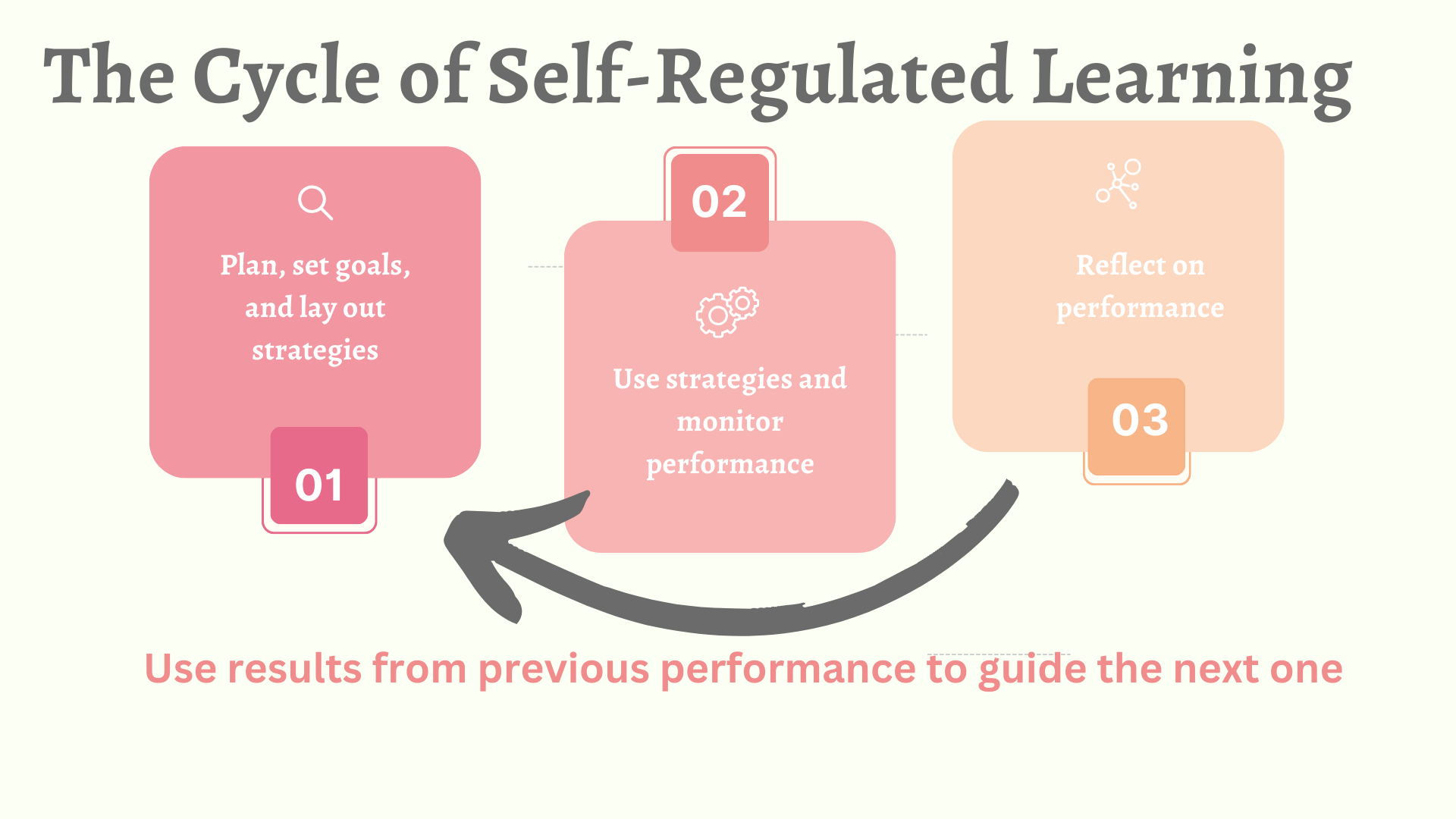
Technical competencies will continue evolving, and anything you learn today might become obsolete tomorrow. The ultimate future-proofing isn’t mastering specific tools or technologies—it’s developing the capacity to learn continuously and adapt rapidly.
Metacognition—thinking about how you think and learn—becomes a superpower in fast-changing environments. Understanding your own learning style, recognizing when you’re hitting cognitive barriers, and knowing strategies to overcome them makes every future learning experience more efficient.
Build resilience and comfort with uncertainty. The professionals who struggle most with change aren’t necessarily those with outdated skills, but those psychologically unable to handle ambiguity, setbacks, and the vulnerability of being a beginner again. Cultivate a growth mindset where challenges energize rather than threaten you.
Network strategically and authentically. Your career resilience depends partly on the strength and diversity of your professional relationships. Maintain connections across industries, seniority levels, and geographic locations. These relationships provide information about emerging opportunities, support during transitions, and potential collaborations you can’t anticipate.
🎓 Your Reskilling Action Plan for the Next 90 Days
Knowledge without action creates comfortable delusions. Transform awareness into momentum with concrete steps over the next three months.
Weeks 1-2: Assessment and Planning
- Conduct a thorough skills inventory of your current capabilities
- Research roles and industries that interest you for the next career phase
- Identify the top 3-5 skills that would significantly increase your career options
- Explore learning resources and choose initial courses or programs
Weeks 3-6: Foundation Building
- Enroll in your first learning program and establish a consistent study schedule
- Join online communities related to your target skills or industries
- Begin following 10-15 thought leaders in your areas of interest
- Start a learning journal or blog documenting your journey
Weeks 7-10: Application and Practice
- Complete your first project applying new skills to solve a real problem
- Seek feedback from more experienced practitioners in your network
- Update your LinkedIn profile and resume with developing competencies
- Identify volunteer opportunities or side projects to build your portfolio
Weeks 11-12: Reflection and Iteration
- Assess your progress and adjust your learning plan based on what’s working
- Set goals for the next 90-day cycle with increased ambition
- Schedule informational interviews with professionals in roles you’re targeting
- Consider how you might teach or mentor others in skills you’re developing
🌟 Transforming Anxiety into Agency
Career uncertainty in the age of AI can feel overwhelming, even paralyzing. The pace of change, the scope of what you might need to learn, and the fear of becoming obsolete create legitimate anxiety. But here’s the paradox: the same technologies creating disruption also provide unprecedented tools for adaptation.
You have access to learning resources that previous generations couldn’t imagine. You can acquire new skills faster and more affordably than ever before. You can build global networks and showcase your capabilities to worldwide audiences. The barriers to reinvention have never been lower.
Reskilling isn’t about achieving some final state of preparedness where you’re forever secure. It’s about developing the confidence that whatever changes come, you have the resourcefulness to adapt. It’s about transforming from someone who fears the future into someone who actively creates it.
The professionals who will thrive in the post-AI economy won’t be those who had perfect foresight about which skills to develop. They’ll be those who embraced continuous learning as a lifestyle, who built diverse capabilities, who remained curious and adaptable, and who saw change not as a threat but as an invitation to evolve.
Your career isn’t something that happens to you—it’s something you intentionally design and continuously redesign. The question isn’t whether the economy will change or whether AI will transform your industry. Those things are certain. The only question is whether you’ll be among those who adapt proactively or those who wait until change is forced upon them.
Start today. Not tomorrow, not next month when things calm down, not next year when you have more time. Today. Take one small action toward building the skills that will make you valuable in tomorrow’s economy. Your future self will thank you for the investment you’re about to make.