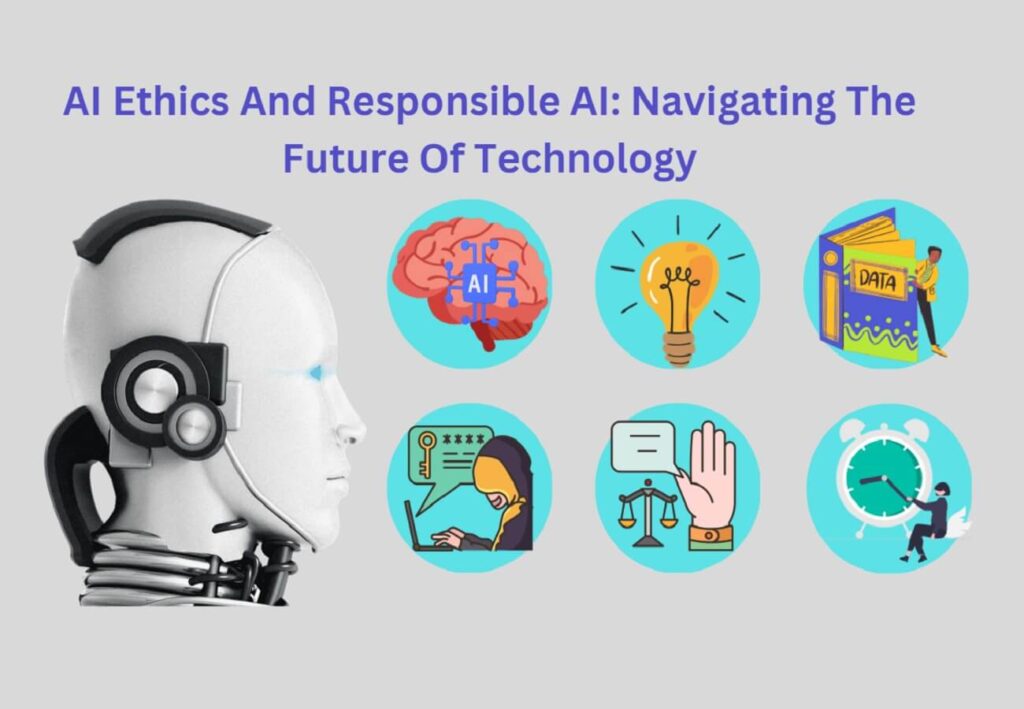
Artificial intelligence is reshaping education, industry, and society—but without ethical foundations, its potential becomes a liability rather than an asset for humanity.

🌍 The Emerging Imperative of Ethical AI Education
The rapid advancement of artificial intelligence technologies has created an urgent need for comprehensive ethical education. As AI systems become increasingly integrated into healthcare, criminal justice, education, and daily life, the stakes for responsible development have never been higher. Organizations worldwide are recognizing that technical proficiency alone is insufficient—tomorrow’s AI practitioners must be equipped with robust ethical frameworks.
Educational institutions face a critical challenge: preparing students to navigate complex moral landscapes where algorithmic decisions can affect millions of lives. From facial recognition systems that exhibit racial bias to recommendation algorithms that amplify misinformation, the consequences of ethically uninformed AI development are already visible. This reality demands a fundamental shift in how we approach technology education.
The integration of ethics into AI curricula isn’t merely an academic exercise—it’s a practical necessity for creating sustainable, trustworthy systems. Students learning to build neural networks must simultaneously understand concepts like fairness, accountability, transparency, and privacy. This dual focus ensures that the next generation of technologists develops solutions that enhance rather than undermine human dignity.
🎓 Building Foundational Knowledge in AI Ethics
Effective ethical AI education begins with establishing clear conceptual foundations. Students must understand that ethics in technology isn’t about imposing restrictions on innovation, but rather about channeling creativity toward beneficial outcomes. This perspective shift transforms ethics from a perceived obstacle into a strategic advantage.
Core principles that should anchor any ethical AI curriculum include:
- Beneficence: Designing systems that actively promote human welfare and societal good
- Non-maleficence: Avoiding creation of systems that cause harm, whether intentional or through negligence
- Autonomy: Respecting human agency and decision-making capacity in AI-augmented environments
- Justice: Ensuring equitable distribution of AI benefits and preventing discriminatory outcomes
- Explicability: Creating transparent systems whose decisions can be understood and challenged
These principles provide scaffolding for analyzing real-world scenarios. When students examine case studies like Amazon’s discontinued recruiting tool that discriminated against women, or predictive policing algorithms that perpetuated racial profiling, they develop critical thinking skills essential for responsible innovation.
Interdisciplinary Approaches to Complex Problems
The most effective ethical AI education transcends traditional disciplinary boundaries. Computer science students benefit enormously from exposure to philosophy, sociology, psychology, and law. Conversely, humanities students gain valuable perspective by understanding technical constraints and possibilities.
This interdisciplinary approach reveals that ethical challenges in AI rarely have purely technical solutions. Addressing algorithmic bias, for instance, requires not just improved data cleaning techniques, but also sociological understanding of how bias manifests in society and philosophical frameworks for defining fairness across different contexts.
⚖️ Navigating the Landscape of AI Bias and Fairness
Bias in artificial intelligence represents one of the most pressing ethical challenges facing the field. Machine learning systems learn from historical data that often reflects existing societal prejudices. Without careful intervention, these systems amplify and institutionalize discrimination at scale.
Educational programs must help students recognize that bias enters AI systems through multiple pathways—not just training data, but also problem formulation, feature selection, and evaluation metrics. A loan approval algorithm might technically treat all applicants equally while still producing discriminatory outcomes if it relies on zip codes that correlate with racial demographics.
Understanding different conceptions of fairness is crucial. Should an algorithm achieve demographic parity, ensuring each group receives positive outcomes at similar rates? Or should it maintain equal error rates across groups? Perhaps it should focus on individual fairness, treating similar individuals similarly? These questions have no universal answers—context determines which approach is most appropriate.
Practical Frameworks for Bias Mitigation
Students need concrete tools for identifying and addressing bias throughout the AI development lifecycle. Pre-processing techniques can help balance training datasets or remove problematic correlations. In-processing methods modify learning algorithms to optimize for fairness alongside accuracy. Post-processing approaches adjust model outputs to achieve desired fairness criteria.
However, technical interventions alone prove insufficient. Ethical AI education must emphasize the importance of diverse development teams, stakeholder engagement, and ongoing monitoring. Systems deployed into the real world require continuous evaluation as societal contexts evolve and new edge cases emerge.
🔒 Privacy, Security, and Data Stewardship
The fuel powering modern AI systems—data—raises profound ethical questions about privacy and consent. Educational programs must prepare students to navigate tensions between data utility and individual privacy rights. This becomes especially critical as AI systems increasingly process sensitive information about health, behavior, and identity.
Contemporary privacy challenges extend far beyond traditional concerns about data breaches. AI systems can infer sensitive attributes that individuals never explicitly disclosed. A person’s social media activity might reveal their political views, sexual orientation, or mental health status with disturbing accuracy. Students must grapple with questions about whether such inferences constitute privacy violations, even when derived from publicly available information.
Privacy-preserving techniques like differential privacy, federated learning, and homomorphic encryption offer promising technical solutions. However, implementing these approaches requires careful consideration of trade-offs between privacy protection and model performance. Ethical education helps students make informed decisions about when accuracy compromises might be justified to protect individual rights.
Building Cultures of Data Responsibility
Beyond technical safeguards, ethical AI education must instill a culture of data stewardship. This means treating personal information as a resource held in trust rather than a commodity to be exploited. Students should learn to question whether data collection is truly necessary, how long information should be retained, and who should have access under what circumstances.
The concept of data minimization—collecting only information essential for specific purposes—stands in tension with the data-hungry nature of many modern AI techniques. Navigating this tension requires mature ethical reasoning and willingness to accept technical limitations in service of greater values.
🤖 Accountability and Transparency in Algorithmic Systems
As AI systems assume greater decision-making authority, questions of accountability become paramount. When an autonomous vehicle causes an accident or a medical diagnosis algorithm makes an error, who bears responsibility? The developer? The deploying organization? The algorithm itself? Ethical AI education must prepare students to think systematically about accountability structures.
Transparency serves as a prerequisite for meaningful accountability. Stakeholders cannot challenge or appeal algorithmic decisions they don’t understand. However, transparency in AI involves complex trade-offs. Full disclosure of model architectures might compromise intellectual property or enable adversarial attacks. Simplified explanations might mislead users about system capabilities and limitations.
Explainable AI (XAI) has emerged as a critical research area addressing these challenges. Students should learn various interpretability techniques, from feature importance analysis to counterfactual explanations, while recognizing that different stakeholders require different types of explanations. A data scientist needs technical details, while an end user needs intuitive understanding of how inputs affect outputs.
Designing for Meaningful Human Oversight
Accountability frameworks must preserve meaningful human oversight while leveraging AI capabilities. This requires careful attention to human-AI interaction design. Systems that nominally include “human-in-the-loop” oversight often create automation bias, where human operators defer to algorithmic recommendations without critical evaluation.
Ethical education should emphasize designing systems that support rather than supplant human judgment. This includes providing contextual information, highlighting uncertainty, and enabling easy override of algorithmic recommendations. The goal is complementarity—combining human intuition and contextual understanding with algorithmic consistency and scale.
🌐 Global Perspectives and Cultural Competence
AI technologies developed in one cultural context often get deployed globally, creating ethical tensions when values and norms differ across societies. Ethical AI education must cultivate cultural competence and awareness of diverse perspectives on technology’s role in human flourishing.
Privacy expectations, for instance, vary significantly across cultures. Individualistic societies may prioritize personal data control, while collectivist cultures might emphasize community welfare over individual privacy. Concepts of fairness similarly reflect cultural values—some societies prioritize equality of opportunity while others focus on equality of outcomes.
Educational programs should expose students to international frameworks and regulations, from the European Union’s General Data Protection Regulation (GDPR) to China’s approach to algorithmic governance. Understanding these different regulatory philosophies helps students develop systems that can operate ethically across jurisdictions.
💼 Preparing for Real-World Ethical Challenges
Classroom learning must prepare students for ethical dilemmas they’ll face in professional settings. Organizations often create pressure to prioritize speed and profitability over ethical considerations. Ethical AI education should equip students with strategies for navigating these tensions and advocating for responsible practices.
Case-based learning proves particularly valuable for developing practical judgment. Examining scenarios like the Cambridge Analytica scandal, facial recognition controversies, or debates about AI weapons systems allows students to apply ethical frameworks to messy real-world situations without clear right answers.
Role-playing exercises can simulate organizational dynamics and stakeholder conflicts. Students might take on perspectives of different actors—developers, managers, users, regulators—to understand competing pressures and practice articulating ethical concerns to diverse audiences.
Building Ethical Courage and Professional Identity
Perhaps most importantly, ethical AI education must foster moral courage—the willingness to raise concerns and resist unethical practices even when doing so carries professional risks. This requires helping students develop strong professional identities rooted in commitment to public good rather than narrow self-interest.
Exposure to positive role models matters enormously. Inviting practitioners who have successfully advocated for ethical practices within organizations demonstrates that integrity and career success need not be mutually exclusive. Alumni networks connecting students with ethically-minded professionals provide ongoing support and guidance.
🔮 Emerging Frontiers in AI Ethics Education
As AI capabilities expand, new ethical challenges continuously emerge. Generative AI systems that create realistic synthetic media raise questions about truth and authenticity. Brain-computer interfaces blur boundaries between human and machine cognition. Artificial general intelligence, should it become feasible, would present unprecedented governance challenges.
Effective ethical AI education must remain dynamic, continuously incorporating emerging issues. This requires educators to maintain active engagement with current research and industry developments. Students benefit from learning not just established ethical principles, but also frameworks for ethical reasoning that can be applied to unforeseen challenges.
The integration of ethical considerations into technical AI courses represents best practice, rather than relegating ethics to standalone courses. When students learn about reinforcement learning, they should simultaneously explore ethical implications of systems that learn through interaction with environments. Neural network architectures should be discussed alongside questions about interpretability and accountability.
🚀 Empowering the Next Generation of Responsible Innovators
The ultimate goal of ethical AI education extends beyond preventing harm—it’s about empowering students to create technologies that actively promote human flourishing. This positive vision emphasizes AI’s potential to address pressing global challenges from climate change to healthcare access, when developed with integrity and foresight.
Students should understand that ethical considerations often drive innovation rather than constraining it. Privacy-preserving machine learning techniques have opened new application domains. Fairness-aware algorithms have revealed insights about decision-making processes. Explainable AI has improved trust and adoption. Framing ethics as opportunity rather than obstacle cultivates creative problem-solving.
Collaborative projects where students develop AI systems for social good provide invaluable experience. Whether creating tools to support mental health, improve accessibility, or enhance educational outcomes, these projects demonstrate how technical skills combine with ethical commitment to generate meaningful impact.
🌟 Cultivating a Sustainable Future Through Ethical Practice
The transformation of AI education to prioritize ethics alongside technical competence represents an investment in our collective future. As artificial intelligence increasingly shapes human experience, the values embedded in these systems will profoundly influence society’s trajectory. Educators bear responsibility for ensuring that tomorrow’s AI practitioners possess not just the knowledge to build powerful systems, but the wisdom to build beneficial ones.
This educational evolution requires commitment from multiple stakeholders. Universities must allocate resources for interdisciplinary programs and hire faculty with diverse expertise. Industry partners should support educational initiatives and provide real-world perspectives. Policymakers can create incentives for ethical AI development. Students themselves must embrace the responsibility that comes with technological capability.
The path forward demands ongoing dialogue, experimentation, and refinement of educational approaches. No single curriculum will perfectly address all ethical dimensions of AI. However, by committing to continuous improvement and maintaining focus on core principles of integrity, fairness, and accountability, we can nurture a generation of technologists prepared to navigate the complex terrain ahead with both competence and conscience.