Education is undergoing a digital revolution, and gamified learning interfaces are at the forefront of transforming how students engage with knowledge and skills.

Traditional educational methods often struggle to maintain student attention in an era dominated by interactive digital experiences. The solution? Gamification—a powerful approach that leverages game design elements to create immersive, motivating learning environments. By incorporating points, badges, leaderboards, and interactive challenges into educational platforms, we’re witnessing a paradigm shift that makes learning not just effective, but genuinely enjoyable.
The science behind gamified learning is compelling. When students interact with game-based educational interfaces, their brains release dopamine, a neurotransmitter associated with pleasure and motivation. This neurological response creates a positive feedback loop, encouraging continued engagement and deeper learning. What once felt like obligatory studying transforms into an exciting journey of discovery and achievement.
🎮 Understanding the Gamification Framework in Education
Gamification in education isn’t about turning every lesson into a video game. Rather, it’s about strategically implementing game mechanics that enhance the learning experience. These mechanics tap into fundamental psychological drivers that motivate human behavior: achievement, competition, collaboration, and progression.
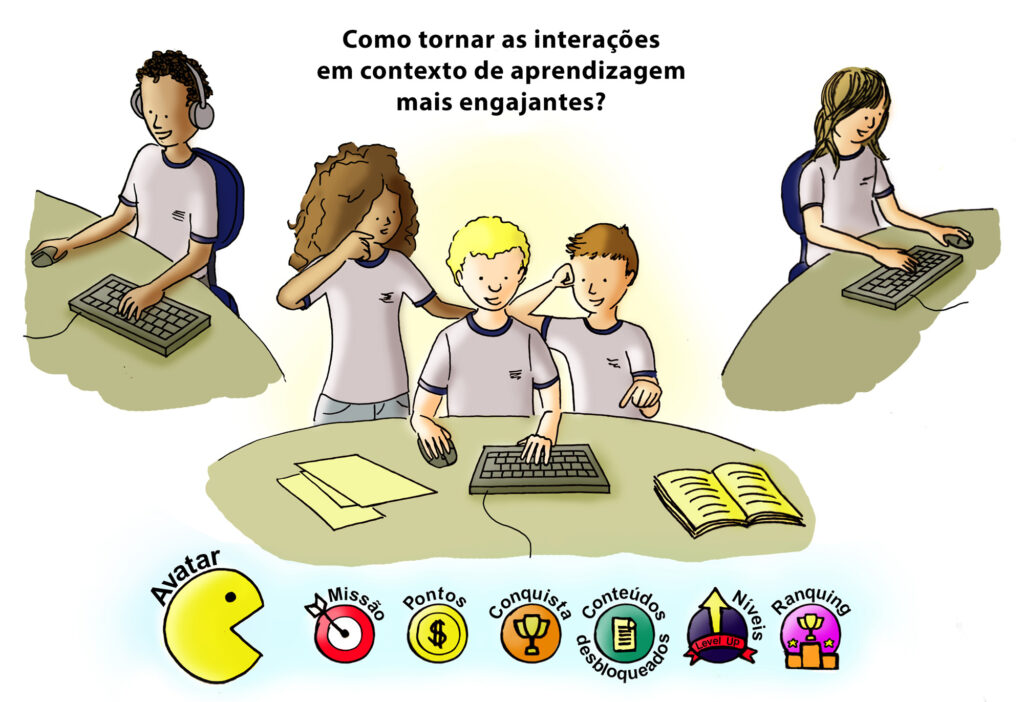
The most effective gamified learning platforms incorporate several core elements. Progress bars provide visual feedback on advancement through content, while achievement systems reward milestones with badges or certificates. Point systems quantify learning progress, and leaderboards introduce healthy competition. Challenge-based learning breaks content into manageable quests, and narrative frameworks give context and meaning to educational journeys.
Research from the University of Colorado demonstrated that students using gamified learning platforms showed 34% higher engagement rates compared to traditional digital learning tools. More impressively, retention rates improved by 28%, suggesting that gamification doesn’t just make learning more fun—it makes it more effective.
The Psychology Behind Points, Badges, and Leaderboards 🏆
The three pillars of gamification—points, badges, and leaderboards—work synergistically to create powerful motivational systems. Points provide immediate feedback, giving learners a quantifiable measure of their progress. Every correct answer, completed module, or mastered skill translates into tangible rewards that accumulate over time.
Badges serve as symbolic achievements that represent mastery of specific skills or completion of significant milestones. Unlike points that flow continuously, badges are distinct accomplishments that learners can collect and display. They create a sense of identity and expertise, transforming abstract learning outcomes into concrete achievements that students take pride in earning.
Leaderboards introduce the element of social comparison, which can be incredibly motivating for competitive learners. However, well-designed systems balance competition with collaboration, offering both individual and team-based challenges. This prevents demotivation among lower-ranked students while still providing aspirational goals.
Intrinsic Versus Extrinsic Motivation
Critics of gamification sometimes argue that external rewards undermine intrinsic motivation—the natural desire to learn for learning’s sake. However, sophisticated gamified systems address this concern by gradually shifting focus from extrinsic rewards to intrinsic satisfaction. Early stages may emphasize points and badges, but as learners progress, the system highlights personal growth, skill mastery, and real-world application.
The key is designing systems where game elements support rather than replace genuine learning objectives. When students pursue badges because they represent meaningful competencies rather than arbitrary checkpoints, gamification enhances rather than diminishes educational value.
Real-World Success Stories: Gamification in Action 🌟
Duolingo stands as perhaps the most recognizable example of gamified education success. The language-learning platform transforms vocabulary acquisition and grammar practice into an engaging daily habit through streaks, experience points, and competitive leagues. With over 500 million users, Duolingo demonstrates that gamification can scale educational impact globally.
Khan Academy incorporated gamification elements by introducing energy points, badges, and avatars, allowing learners to track progress across mathematics, science, and humanities. Students can visualize their knowledge maps expanding as they master new concepts, creating a satisfying sense of territory conquered in the landscape of knowledge.
Classcraft takes gamification even further by transforming entire classrooms into role-playing games. Students create character avatars, join teams, and earn powers by demonstrating positive behaviors and academic achievement. Teachers report improved classroom management, increased participation, and stronger peer collaboration.
In corporate training, companies like Deloitte implemented gamified leadership training programs and saw completion rates jump from 30% to 47%. Gamification doesn’t just work for children—it engages learners across all age groups when implemented thoughtfully.
Designing Effective Gamified Learning Experiences 🎨
Creating successful gamified educational interfaces requires more than superficially adding points to existing content. Effective design begins with clear learning objectives and backward maps game mechanics to support those goals. Every game element should serve an educational purpose, not exist merely for entertainment.
Balance represents another crucial design consideration. Systems must challenge learners appropriately—too easy and students become bored, too difficult and they become frustrated. Adaptive difficulty adjustment ensures that as learners improve, challenges scale accordingly, maintaining that sweet spot psychologists call “flow state.”
Key Design Principles
- Clear goals: Students should always understand what they’re working toward and why it matters
- Immediate feedback: Responses to actions should be instantaneous, reinforcing correct behaviors and gently correcting mistakes
- Progressive disclosure: Introduce complexity gradually, preventing cognitive overload while maintaining engagement
- Meaningful choices: Provide autonomy through branching paths and personalization options
- Social connectivity: Enable collaboration and healthy competition through community features
- Narrative context: Embed learning within compelling stories that give purpose to challenges
Visual design plays an equally important role. Clean interfaces with intuitive navigation prevent cognitive friction, while appealing aesthetics create emotional engagement. Color psychology, animation timing, and sound design all contribute to the overall experience, though they should enhance rather than distract from educational content.
The Neuroscience of Gamified Learning 🧠
Understanding how gamification affects the brain illuminates why these approaches prove so effective. When learners encounter challenges in gamified systems, their brains enter a state of heightened attention. Achieving success triggers dopamine release, which strengthens neural pathways associated with the learned information.
This neurochemical response creates what psychologists call “reward-motivated learning.” The anticipation of rewards—whether points, badges, or level advancement—primes the hippocampus and other memory-forming brain regions for enhanced information encoding. Studies using fMRI imaging show increased activity in the ventral striatum, a brain region associated with reward processing, when subjects engage with gamified learning tasks.
Spaced repetition, a proven memory technique, integrates naturally into gamified systems. By strategically timing review sessions and incorporating previously learned content into new challenges, games reinforce long-term retention without the tedium of traditional drilling.
Emotion and Memory Formation
The emotional engagement generated by gamified experiences significantly impacts memory formation. Positive emotions during learning create stronger, more accessible memories compared to neutral emotional states. The excitement of leveling up, the satisfaction of earning a difficult badge, or the camaraderie of team achievements all enhance the memorability of associated educational content.
Moreover, the narrative contexts often employed in gamified learning activate multiple memory systems simultaneously. Story-based learning engages episodic memory, while the skills being practiced develop procedural memory. This multi-modal encoding creates redundant memory traces, making information more resistant to forgetting.
Overcoming Implementation Challenges 💪
Despite its promise, gamification isn’t a silver bullet for educational challenges. Implementation requires thoughtful planning, adequate resources, and ongoing refinement. Educators often face technical barriers, budget constraints, and resistance from stakeholders accustomed to traditional approaches.
Technology infrastructure represents a significant consideration. Not all schools and institutions have reliable internet access, sufficient devices, or technical support staff. Gamified platforms must therefore be designed with varying levels of technological sophistication in mind, offering offline capabilities and low-bandwidth options where appropriate.
Teacher training proves equally critical. Educators need support in understanding game mechanics, interpreting analytics from gamified platforms, and integrating these tools into broader pedagogical strategies. Professional development programs should emphasize that gamification supplements rather than replaces quality teaching.
Addressing Equity Concerns
Gamification must be implemented equitably to avoid exacerbating existing educational disparities. Students with limited access to technology outside school hours may fall behind peers who can practice more frequently. Design solutions include offering extensive in-class time for gamified activities and ensuring that achievement systems reward effort and improvement rather than only raw performance.
Cultural sensitivity also matters. Game mechanics that resonate in one cultural context may not translate effectively to others. Competitive leaderboards, for instance, align with individualistic cultural values but may cause discomfort in more collectivist societies. Offering various engagement modes—competitive, collaborative, and individual—accommodates diverse learner preferences.
The Future of Gamified Education: Emerging Trends 🚀
Artificial intelligence is poised to revolutionize gamified learning by enabling unprecedented personalization. AI-powered systems can analyze individual learning patterns, identify knowledge gaps, and dynamically adjust content difficulty and presentation style. These adaptive systems create unique learning paths for each student, maximizing efficiency and engagement.
Virtual and augmented reality technologies are bringing immersive gamification to education. Imagine history students exploring ancient Rome through VR reconstructions, earning badges for discovering historical artifacts, or biology students manipulating 3D molecular structures in augmented reality laboratories. These technologies transform abstract concepts into tangible, interactive experiences.
Blockchain technology may enable portable achievement credentials, allowing learners to accumulate verified badges and certifications across multiple platforms and institutions. This creates continuous learning profiles that follow individuals throughout their educational and professional journeys.
Social Learning Networks
The future of gamified education increasingly emphasizes social connectivity. Platforms are evolving from isolated individual experiences to collaborative learning communities where students can form study groups, share strategies, mentor peers, and compete in team-based challenges. This social dimension addresses one of traditional online learning’s greatest weaknesses—isolation.
Multiplayer educational games enable synchronous collaboration, where students must combine their skills and knowledge to solve complex problems. These experiences develop not only subject matter expertise but also crucial soft skills like communication, leadership, and conflict resolution.
Measuring Success: Analytics and Assessment 📊
Gamified learning platforms generate rich data streams that offer unprecedented insights into learning processes. Unlike traditional assessments that capture performance at discrete moments, game-based systems continuously track student interactions, revealing patterns in problem-solving approaches, time management, and conceptual understanding.
Learning analytics derived from gamified systems can identify at-risk students early, enabling timely interventions. If a student’s engagement suddenly drops or they repeatedly struggle with specific content types, educators receive alerts and can provide targeted support before small difficulties become insurmountable obstacles.
However, assessment in gamified environments shouldn’t rely solely on in-game metrics. Comprehensive evaluation requires validating that achievements within game systems correlate with genuine learning outcomes measured through traditional assessments, practical applications, and long-term retention tests.
Practical Steps for Educators Ready to Gamify Learning ✨
Educators interested in incorporating gamification should start small rather than attempting wholesale transformation. Begin by adding simple elements like achievement badges for homework completion or collaborative challenges during review sessions. Observe student responses and iteratively refine approaches based on what resonates.
Numerous platforms offer ready-made gamification tools. Kahoot! transforms quizzes into competitive games, while Classcraft provides comprehensive classroom gamification. For educators wanting more control, tools like Rezzly and Bunchball allow customization of game mechanics to match specific curricular needs.
Student input proves invaluable during implementation. Involve learners in co-designing gamification elements, soliciting feedback on what motivates them and what feels artificial or forced. This participatory approach increases buy-in and ensures systems align with student preferences.
Documentation and reflection complete the implementation process. Keep records of what works, what doesn’t, and why. Share experiences with professional learning communities, contributing to the collective understanding of effective gamification practices.
Beyond Entertainment: Gamification’s Deeper Educational Value 🎯
Perhaps gamification’s greatest contribution to education isn’t making learning more fun—though that’s valuable—but rather fundamentally changing students’ relationships with failure and persistence. In traditional educational settings, mistakes often carry negative consequences that discourage risk-taking and experimentation.
Games normalize failure as a natural part of learning. Players expect to fail levels multiple times before succeeding, viewing each failure as providing information rather than reflecting personal inadequacy. This mindset shift proves transformative for education, encouraging the growth mindset that psychologist Carol Dweck identifies as crucial for learning.
Gamified systems also make abstract progress concrete. Traditional education often involves delayed gratification—studying today for exam results weeks later or career benefits years in the future. Games provide immediate feedback loops and incremental victories that sustain motivation through long learning journeys.
The transferable skills developed through gamified learning—strategic thinking, resource management, pattern recognition, and collaborative problem-solving—extend far beyond specific subject matter. Students don’t just learn mathematics or history; they develop metacognitive skills that enhance learning across domains.
Creating Lasting Educational Transformation 🌈
Gamified learning interfaces represent more than a passing educational trend—they reflect a fundamental reimagining of how humans can effectively acquire knowledge and skills in the digital age. By aligning educational design with psychological principles of motivation, engagement, and memory formation, gamification creates learning experiences that are simultaneously more effective and more enjoyable.
The most successful implementations recognize that gamification serves learning objectives rather than replacing them. Points, badges, and leaderboards are tools, not ends in themselves. When thoughtfully designed and purposefully implemented, these tools unlock educational potential by meeting learners where they are—in a world increasingly shaped by interactive digital experiences.
As technology continues evolving, the possibilities for gamified education will only expand. Educators, designers, and technologists who embrace this approach while maintaining focus on genuine learning outcomes will create the engaging, effective educational experiences that prepare students for an uncertain but exciting future. The power to level up learning is here—the question is how boldly we’ll embrace it.