Online learning has transformed education, yet keeping learners motivated remains one of the most pressing challenges facing instructors and course designers today.

🎯 Why Motivation Matters More Than Ever in Digital Learning Environments
The shift toward e-learning has revealed a fundamental truth: access to information isn’t enough. While traditional classrooms naturally create structure and social accountability, online education requires learners to self-regulate, stay focused, and persist through challenges without the physical presence of peers or instructors. This makes understanding motivation science not just beneficial—it’s essential for creating successful learning experiences.
Research consistently shows that motivated learners achieve better outcomes, complete courses at higher rates, and retain information more effectively. Yet online courses face completion rates as low as 5-15% in some contexts, highlighting a critical gap between course availability and learner engagement. The science of motivation provides the roadmap for bridging this divide.
Understanding the Core Components of Motivation in Learning Contexts
Motivation isn’t a single switch that turns on or off. It’s a complex psychological system influenced by multiple factors that educational psychologists have studied extensively. To effectively apply motivation science in e-learning, we must first understand its fundamental components.
Intrinsic Versus Extrinsic Motivation: The Foundation
Intrinsic motivation drives learners to engage with content because they find it inherently interesting, enjoyable, or meaningful. These learners pursue knowledge for its own sake, experiencing satisfaction from mastery and understanding. Extrinsic motivation, conversely, comes from external rewards like certificates, job advancement, or recognition from others.
While both types play important roles, research from Self-Determination Theory demonstrates that intrinsic motivation leads to deeper learning, better retention, and greater persistence. The challenge for e-learning designers becomes clear: how do we nurture intrinsic motivation while acknowledging that many learners initially come with extrinsic goals?
The Three Psychological Needs Driving Engagement
Self-Determination Theory identifies three fundamental psychological needs that, when satisfied, foster intrinsic motivation and well-being. These needs apply universally across cultures and contexts, making them particularly valuable for designing global e-learning experiences.
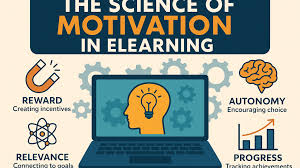
Autonomy represents the need to feel in control of one’s learning journey. Online learners who experience autonomy feel they’re learning by choice rather than compulsion, selecting paths that align with their interests and goals.
Competence refers to the need to feel effective and capable. Learners must experience themselves as making progress and developing mastery over material, not just passively consuming information.
Relatedness addresses the human need for connection and belonging. Even in online environments, learners benefit enormously from feeling connected to instructors, peers, and a broader learning community.
🚀 Translating Motivation Science Into Practical E-Learning Design
Understanding theory provides the foundation, but application requires specific strategies that instructional designers and educators can implement immediately. The following approaches have demonstrated effectiveness across various online learning contexts.
Creating Autonomy-Supportive Learning Environments
Autonomy doesn’t mean leaving learners without guidance—it means providing structure while offering meaningful choices. Effective e-learning platforms allow learners to customize their experience in ways that matter to them.
Consider offering multiple pathways through content. Some learners prefer video lectures, while others thrive with reading materials or interactive simulations. Providing choice in assessment methods—whether learners demonstrate knowledge through essays, presentations, projects, or tests—respects different strengths and preferences.
The language instructors use also impacts perceived autonomy. Explaining the rationale behind learning activities, acknowledging that some tasks might feel difficult, and using invitational rather than controlling language all contribute to autonomy support. Phrases like “you might consider” or “one approach could be” work better than “you must” or “you should.”
Building Competence Through Strategic Scaffolding
Competence develops when learners experience optimal challenge—tasks that stretch their abilities without overwhelming them. This principle, derived from Vygotsky’s Zone of Proximal Development, requires careful attention to difficulty progression and feedback systems.
Effective e-learning courses begin with foundational concepts and gradually increase complexity. Microlearning approaches, breaking content into digestible chunks, help learners experience frequent success and build confidence incrementally.
Immediate, constructive feedback proves essential for competence building. Rather than simply marking answers correct or incorrect, effective systems explain why responses succeed or fail and guide learners toward understanding. Adaptive learning technologies can personalize difficulty levels based on individual performance, maintaining optimal challenge for each learner.
Fostering Relatedness in Virtual Spaces
The perception that online learning is inherently isolating represents one of its greatest challenges. However, intentional design can create genuine connection and community, even at a distance.
Discussion forums become more engaging when instructors participate actively, not just as evaluators but as fellow community members sharing insights and asking thoughtful questions. Structured peer collaboration—through group projects, peer review, or study groups—creates accountability and social bonds.
Personalization extends beyond content to communication. Video introductions from instructors, personal welcome messages, and instructor availability through multiple channels help learners feel seen and supported. Some platforms successfully use cohort-based models where groups progress through content together, creating natural peer connections.
🎓 Leveraging Goal-Setting Theory for Enhanced Achievement
Goal-setting research provides another powerful framework for e-learning design. Not all goals produce equal results—their structure and characteristics significantly impact motivation and achievement.
The Power of Specific, Challenging Goals
Vague intentions like “learn more about marketing” pale in comparison to specific targets such as “complete three case studies on digital marketing strategy by Friday.” Research consistently shows that specific, challenging goals lead to higher performance than vague or easy goals.
E-learning platforms can build goal-setting directly into the user experience. Onboarding processes might ask learners to articulate specific objectives, then create personalized learning paths aligned with those goals. Progress tracking features make advancement visible, providing motivation through competence feedback.
Breaking Long-Term Goals Into Proximal Subgoals
Online courses that span weeks or months risk losing learners who struggle to maintain motivation across extended timeframes. Breaking overarching objectives into smaller, proximal subgoals provides regular achievement experiences that sustain engagement.
Instead of focusing solely on course completion, effective designs celebrate module completions, skill acquisitions, and milestone achievements. Gamification elements like badges and progress bars leverage this principle, though they work best when tied to meaningful accomplishments rather than arbitrary metrics.
💡 The Role of Expectancy-Value Theory in Course Engagement
Expectancy-Value Theory posits that motivation depends on two factors: learners’ expectations of success and the value they place on that success. Both dimensions require attention in e-learning design.
Building Success Expectations Through Mastery Experiences
Learners who believe they can succeed invest more effort and persist longer through difficulties. Building this self-efficacy requires providing early success experiences, modeling from similar others who have succeeded, and verbal encouragement from credible sources.
Course introductions benefit from showcasing testimonials from previous learners with backgrounds similar to current students. Seeing relatable peers succeed builds expectancy for personal success. Well-designed onboarding that ensures early wins—even small ones—establishes positive momentum.
Enhancing Perceived Value Through Relevance and Authenticity
Even when learners believe they can succeed, they won’t invest effort unless they value the outcome. Making learning relevant to real-world applications significantly enhances perceived value.
Case studies, scenario-based learning, and authentic assessment tasks that mirror real professional or personal challenges help learners see immediate applicability. Explicitly connecting course content to learners’ stated goals—whether career advancement, personal development, or solving specific problems—reinforces value.
🔄 Creating Sustainable Motivation Through Flow States
Mihaly Csikszentmihalyi’s concept of flow—that state of complete absorption where time seems to disappear—represents the pinnacle of engaged learning. While achieving flow requires specific conditions, e-learning designers can create environments that make flow more likely.
Flow occurs when challenge level matches skill level, goals are clear, and feedback is immediate. Interactive elements that respond to learner input, simulations that provide real-time consequences, and learning activities with clear success criteria all contribute to flow potential.
Removing unnecessary distractions from the learning environment helps maintain focus. Clean interface design, minimal navigation complexity, and content presented in logical sequences reduce cognitive load, allowing learners to immerse themselves in material.
📊 Implementing Motivation-Enhancing Technologies and Tools
Technology offers unprecedented opportunities for applying motivation science at scale. Several categories of tools deserve particular attention from e-learning designers.
Adaptive Learning Platforms That Personalize Challenge
Artificial intelligence and machine learning enable systems that adjust content difficulty based on individual performance, maintaining optimal challenge for each learner. These platforms identify knowledge gaps and provide targeted support, building competence more efficiently than one-size-fits-all approaches.
Social Learning Technologies That Build Community
Discussion forums, collaborative workspaces, and synchronous video conferencing tools address relatedness needs. The most effective platforms integrate social features seamlessly into the learning experience rather than treating them as separate add-ons.
Some learning management systems now include social features like learner profiles, peer messaging, and community spaces that function similarly to social networks, leveraging familiarity to encourage participation.
Analytics Dashboards That Make Progress Visible
Data visualization tools that show learners their progress, completion percentages, and skill development provide competence feedback while supporting goal pursuit. The key lies in presenting information in motivating rather than overwhelming ways.
🌟 Addressing Motivation Barriers Specific to Online Learning
Despite best design practices, online learners face unique motivational challenges that require explicit attention and strategic solutions.
Combating Isolation and Building Accountability
The flexibility that makes online learning attractive also removes natural accountability structures. Implementing regular check-ins, cohort-based progression, or study partner matching can recreate social accountability.
Instructor presence matters enormously. Regular announcements, timely feedback on assignments, and visible participation in discussions signal that someone notices whether learners engage or disappear, providing external motivation that can eventually internalize.
Managing Competing Priorities and Attention
Online learners often juggle multiple responsibilities—work, family, other commitments—making focused learning time scarce. Microlearning approaches that deliver value in short sessions respect these realities while maintaining progress.
Mobile-optimized content allows learning during otherwise unproductive moments like commutes or waiting periods. Push notifications can serve as helpful reminders rather than intrusions when they reference personal goals and upcoming deadlines learners have set.
🎯 Measuring and Optimizing Motivation in Your E-Learning Programs
Implementing motivation science requires ongoing assessment and refinement. Several metrics help evaluate motivational effectiveness beyond simple completion rates.
Time-on-task measurements reveal engagement depth. High completion rates combined with minimal time investment might indicate surface learning rather than genuine engagement. Conversely, sustained time investment suggests intrinsic interest.
Discussion participation quality—not just quantity—indicates relatedness and engagement. Thoughtful posts that build on others’ ideas signal genuine community involvement.
Survey instruments based on Self-Determination Theory can directly assess whether learners experience autonomy, competence, and relatedness. The Intrinsic Motivation Inventory and Basic Psychological Needs Scale provide validated tools for this purpose.
Learning analytics that track pathway choices, resource usage, and optional activity participation reveal which design elements successfully motivate learners to go beyond minimum requirements.
Building Long-Term Learning Habits Beyond Single Courses
The ultimate goal of applying motivation science extends beyond individual course completion to fostering lifelong learning dispositions. When learners develop intrinsic motivation for learning itself, they continue pursuing knowledge independently.
Helping learners develop metacognitive awareness—understanding their own learning processes, preferences, and strategies—empowers them to self-direct future learning. Courses that explicitly teach learning strategies alongside content serve learners far beyond immediate objectives.
Connecting learners with broader communities of practice in their interest areas provides ongoing relatedness and learning opportunities after formal courses end. Graduates of online programs benefit from continued access to alumni networks and professional communities.
Encouraging learners to set personal learning goals independent of formal coursework, and providing resources to support self-directed learning, demonstrates that education extends beyond credentials to continuous growth.
Transforming Online Education Through Motivation-Centered Design
The science of motivation offers evidence-based pathways for dramatically improving e-learning effectiveness. By intentionally designing for autonomy, competence, and relatedness, setting up effective goal structures, and leveraging technology to personalize and connect, online education can rival or exceed traditional formats in engagement and outcomes.
The challenges facing online education—low completion rates, superficial engagement, learner isolation—are not inherent to the medium but result from designs that ignore fundamental psychological needs. When we apply decades of motivation research to digital learning environments, we create experiences that learners choose to engage with deeply, not because they must but because they want to.
Success requires moving beyond simply digitizing traditional content to thoughtfully crafting experiences that honor how humans actually learn and what drives sustained effort. The tools and technologies exist; what’s needed is commitment to designing with motivation science as a central principle rather than an afterthought.
As online learning continues expanding globally, reaching increasingly diverse populations with varied backgrounds and goals, motivation-centered design becomes not just advantageous but essential. The future of education lies not in choosing between online and traditional formats, but in creating digital learning experiences so engaging, supportive, and effective that learners thrive regardless of where or how they access knowledge.
By unlocking the power of motivation science, educators and designers can transform online learning from a convenient alternative into a powerful, preferred pathway for achievement, growth, and lifelong learning success. The science is clear, the tools are available—now it’s time for implementation. 🚀