Education is no longer confined to ivy-covered walls or exclusive institutions. The democratization of learning has transformed how millions access knowledge worldwide.

🌍 Breaking Down the Walls of Traditional Education
For centuries, education remained a privilege reserved for the elite. Universities, libraries, and centers of learning were accessible only to those with wealth, social status, or geographic proximity. This exclusivity created barriers that prevented countless talented individuals from reaching their potential. Today, we witness a revolutionary shift as technology and progressive policies dismantle these barriers, creating unprecedented opportunities for learners everywhere.
The democratization of education represents more than just increased access to classrooms. It embodies a fundamental reimagining of how knowledge is created, shared, and consumed. From remote villages in Africa to urban centers in Asia, learners now connect with world-class educators and resources that were unimaginable just decades ago.
The Digital Revolution as Education’s Great Equalizer
Technology has emerged as the most powerful catalyst for educational democratization. The internet has transformed into a vast, borderless classroom where information flows freely across continents. Massive Open Online Courses (MOOCs) have shattered traditional limitations, allowing thousands of students to simultaneously attend lectures from Nobel laureates and industry leaders without paying exorbitant tuition fees.
Mobile devices have become powerful learning tools, placing educational resources in the pockets of billions. Smartphones and tablets enable students in developing nations to access the same content available to their counterparts in the world’s most prestigious institutions. This technological leap has created a level playing field that previous generations could never have imagined.
📱 Mobile Learning Applications Transforming Access
Educational apps have revolutionized how people engage with learning materials. These platforms offer interactive experiences, personalized learning paths, and instant feedback mechanisms that adapt to individual needs. Language learning apps have helped millions become multilingual, while coding platforms have opened doors to lucrative tech careers for self-taught programmers.
Khan Academy, Coursera, and Duolingo exemplify how digital platforms democratize education by removing financial barriers. These services provide high-quality instruction at little to no cost, making knowledge accessible regardless of economic background. The gamification of learning through these apps has also increased engagement, making education more enjoyable and effective.
🎓 Open Educational Resources: Knowledge Without Borders
The Open Educational Resources (OER) movement has fundamentally challenged traditional publishing models. Textbooks that once cost hundreds of dollars are now available freely online, licensed for anyone to use, adapt, and share. Universities like MIT have made their entire course catalogs publicly available through OpenCourseWare initiatives, democratizing access to Ivy League education.
Creative Commons licensing has enabled educators worldwide to build upon each other’s work, creating a collaborative ecosystem that benefits all learners. Professors in developing countries can now access and modify high-quality teaching materials created by leading experts, customizing them for local contexts without copyright restrictions.
The Wikipedia Effect on Collective Knowledge
Wikipedia stands as perhaps the most successful democratization project in human history. This collaborative encyclopedia contains millions of articles in hundreds of languages, all freely accessible to anyone with internet connectivity. It has proven that crowdsourced knowledge creation can rival or exceed traditional expert-driven models in scope and accuracy.
The Wikipedia model has inspired countless similar initiatives across disciplines, from open-source software development to citizen science projects. This collaborative approach empowers individuals to both consume and contribute to the world’s knowledge base, transforming passive learners into active participants in education.
💡 Microlearning and Bite-Sized Knowledge Revolution
The democratization of education has also transformed how we structure learning experiences. Traditional semester-long courses are being complemented by microlearning modules that fit into busy schedules. This flexibility allows working professionals, parents, and others with limited time to pursue continuous education without disrupting their lives.
YouTube has emerged as an unexpected educational powerhouse, hosting millions of tutorials covering virtually every conceivable topic. From fixing household appliances to understanding quantum physics, learners can find expert instruction on demand. This informal learning ecosystem complements traditional education, providing practical skills and knowledge outside formal curricula.
🌐 Breaking Geographic Barriers Through Virtual Classrooms
Virtual learning environments have eliminated geography as a limiting factor in education. Students in rural areas can now attend live lectures from instructors continents away, participating in real-time discussions with peers from diverse backgrounds. This global classroom experience enriches learning by exposing students to multiple perspectives and cultural contexts.
Video conferencing technologies have matured to enable seamless synchronous learning experiences. Screen sharing, digital whiteboards, and breakout rooms replicate many aspects of physical classrooms while offering unique advantages like automatic recording and transcription. These tools have proven especially valuable for students with disabilities, providing accessibility features that traditional classrooms often lack.
Hybrid Learning Models Combining Best of Both Worlds
Forward-thinking institutions have adopted hybrid approaches that blend online flexibility with in-person engagement. These models allow students to access content remotely while maintaining valuable face-to-face interactions for discussions, laboratories, and collaborative projects. This flexibility accommodates diverse learning styles and life circumstances, making education more inclusive.
📊 Data-Driven Personalization in Learning
Artificial intelligence and learning analytics are enabling unprecedented personalization in education. Adaptive learning platforms analyze student performance in real-time, adjusting difficulty levels and content delivery to optimize individual learning outcomes. This personalized approach ensures that advanced students aren’t held back while struggling learners receive additional support exactly when needed.
| Traditional Education | Democratized Education |
|---|---|
| One-size-fits-all curriculum | Personalized learning paths |
| Fixed schedules and locations | Flexible, anytime, anywhere access |
| High financial barriers | Free or low-cost options |
| Limited enrollment capacity | Unlimited scalability |
| Standardized assessment | Competency-based progression |
🚀 Empowering Marginalized Communities Through Education Access
Educational democratization has profound implications for social equity. Communities historically excluded from quality education are now accessing resources that enable economic mobility. Women in conservative societies can pursue education discreetly through online platforms, overcoming cultural barriers that prevented traditional schooling.
Refugee populations benefit enormously from digital learning resources that transcend physical displacement. Students forced from their homes can continue education through mobile devices, maintaining academic progress despite chaotic circumstances. Organizations like UNHCR have partnered with educational technology providers to deliver certified courses to displaced populations worldwide.
Indigenous Knowledge Preservation and Sharing
Democratized platforms also enable indigenous communities to document and share traditional knowledge on their own terms. Video platforms, podcasts, and digital archives allow elders to teach younger generations regardless of geographic dispersion. This two-way exchange enriches global education while empowering communities to preserve cultural heritage.
🎯 Skill-Based Learning and Career Transformation
The democratization of education has disrupted traditional credentialing systems. Employers increasingly value demonstrated competencies over formal degrees, opening opportunities for self-taught professionals. Online portfolios, GitHub repositories, and project-based assessments allow individuals to showcase abilities without expensive degree programs.
Bootcamps and intensive training programs have emerged as alternatives to four-year degrees, particularly in technology fields. These programs focus on practical skills directly applicable to employment, often guaranteeing job placement upon completion. This model has enabled career transitions for countless individuals who couldn’t afford or commit to traditional higher education.
Microcredentials and Digital Badges
Digital credentials allow learners to demonstrate specific competencies to employers instantly. Platforms like LinkedIn Learning and Coursera offer certificates that verify completion of specialized courses, creating stackable credentials that build toward comprehensive skill sets. This modular approach lets learners customize education to career goals without unnecessary coursework.
💪 Challenges and Obstacles in Education Democratization
Despite tremendous progress, significant challenges remain. The digital divide persists, with billions still lacking reliable internet access. Rural areas and developing nations often lack infrastructure necessary for effective online learning. Hardware costs, though decreasing, still present barriers for the world’s poorest populations.
Quality control poses another challenge in democratized education. The abundance of free resources makes distinguishing credible content from misinformation difficult. Without proper guidance, learners may waste time on low-quality materials or develop misconceptions that hinder future learning.
The Motivation and Completion Challenge
Self-directed learning requires discipline and motivation that many students lack without traditional structures. MOOC completion rates typically hover below 10%, suggesting that access alone doesn’t guarantee educational success. Building support systems, fostering learning communities, and developing intrinsic motivation remain critical challenges for democratized education models.
🔮 The Future of Democratic Education Systems
Emerging technologies promise to further democratize education. Virtual reality could provide immersive learning experiences previously impossible outside specialized facilities. Medical students might practice surgeries virtually, engineering students could manipulate complex machinery, and history students could explore ancient civilizations firsthand—all without expensive equipment or physical presence.
Blockchain technology may revolutionize credential verification, creating tamper-proof academic records accessible globally. This could eliminate fraud while simplifying transcript sharing across institutions and borders. Smart contracts might automate scholarship distribution, ensuring funds reach deserving students without bureaucratic delays.
- Artificial intelligence tutors providing 24/7 personalized support
- Augmented reality overlaying educational content onto physical environments
- Brain-computer interfaces optimizing information retention
- Global collaborative projects connecting students across continents
- Automated translation enabling instruction in any language
🌟 Building Inclusive Learning Communities
The true power of democratized education lies not just in content access but in community building. Online forums, study groups, and peer-to-peer learning networks create support systems that enhance educational outcomes. These communities provide motivation, answer questions, and offer networking opportunities that extend beyond coursework.
Social learning platforms enable students to learn from each other’s experiences and perspectives. Discussion boards, collaborative projects, and peer review systems develop critical thinking and communication skills while building global networks. These connections often prove as valuable as the formal content itself, creating opportunities for collaboration and friendship across cultural boundaries.
📚 Lifelong Learning as the New Normal
Democratized education has normalized continuous learning throughout life. The rapid pace of technological and social change makes periodic upskilling essential rather than optional. Professionals regularly return to educational platforms to acquire new competencies, staying relevant in evolving job markets.
This shift from education as a life phase to education as a lifelong pursuit fundamentally changes how societies approach learning. Retirement no longer means intellectual stagnation; senior citizens pursue passions and develop skills simply for personal enrichment. This cultural transformation enriches individuals and communities while keeping minds active and engaged.
🎨 Creativity and Innovation Through Accessible Education
When education becomes accessible to all, humanity unlocks previously untapped creative potential. Innovations emerge from unexpected places as diverse minds apply knowledge to local problems. Solutions to global challenges like climate change, disease, and poverty increasingly come from democratically educated individuals bringing fresh perspectives.
The next Einstein might be studying physics on a smartphone in a developing nation, unconstrained by geographic or economic circumstances. The next great novelist might be honing writing skills through free online workshops, unimpeded by lack of access to prestigious writing programs. Democratized education multiplies the number of minds working on humanity’s greatest challenges.
✨ Empowerment Through Knowledge Sharing
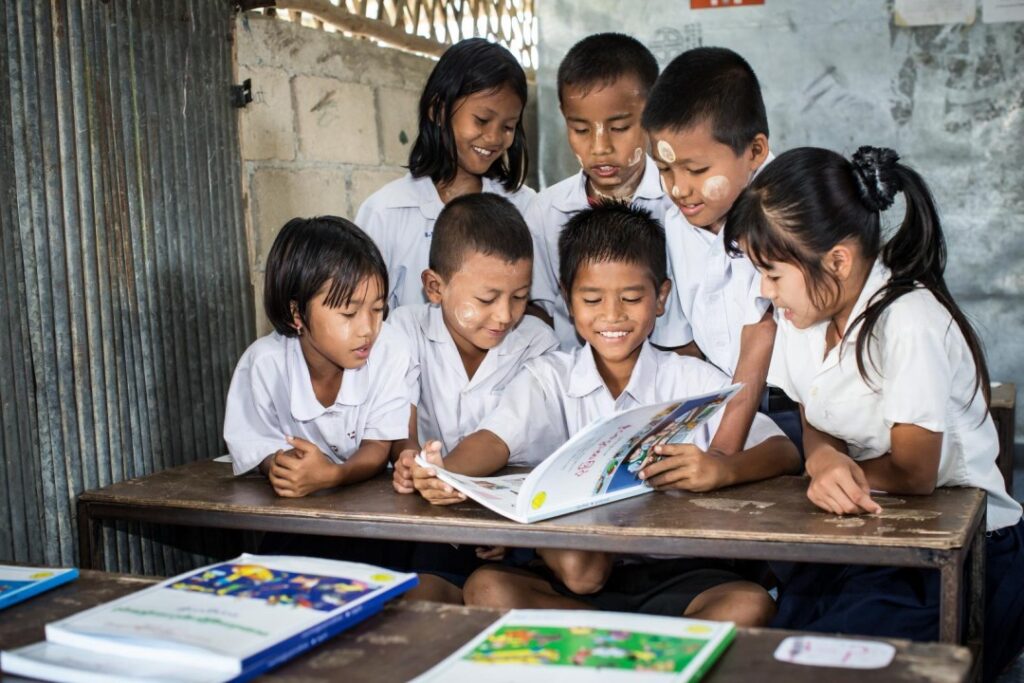
The democratization of education ultimately represents empowerment—giving individuals tools to improve their lives and communities. Knowledge breaks cycles of poverty, challenges oppression, and enables informed civic participation. When everyone can access quality education, societies become more equitable, innovative, and prosperous.
This educational revolution continues accelerating, driven by technological advancement and growing recognition that talent is universal while opportunity has not been. As barriers fall and access expands, we move closer to a world where every person can develop their full potential regardless of circumstances of birth. The rise of democratization in education represents one of humanity’s most hopeful developments, promising a future where minds everywhere can flourish and contribute to collective progress.
The journey toward truly universal education continues, with each technological breakthrough and policy innovation bringing that goal closer to reality. While challenges remain, the trajectory is clear: education is becoming a fundamental right rather than an elite privilege, empowering minds across the globe to dream bigger, achieve more, and build better futures for themselves and their communities.