Technology has become the cornerstone of modern education, yet millions of students worldwide remain disconnected from digital learning opportunities, creating an urgent need for tech equity.

🌍 Understanding the Global Digital Divide in Education
The digital divide represents more than just a gap in access to computers and internet connectivity. It embodies a complex web of socioeconomic disparities that fundamentally affect how students learn, grow, and prepare for future careers. In developing nations, entire communities struggle with limited or no access to basic digital infrastructure, while in developed countries, underserved populations face similar challenges within affluent societies.
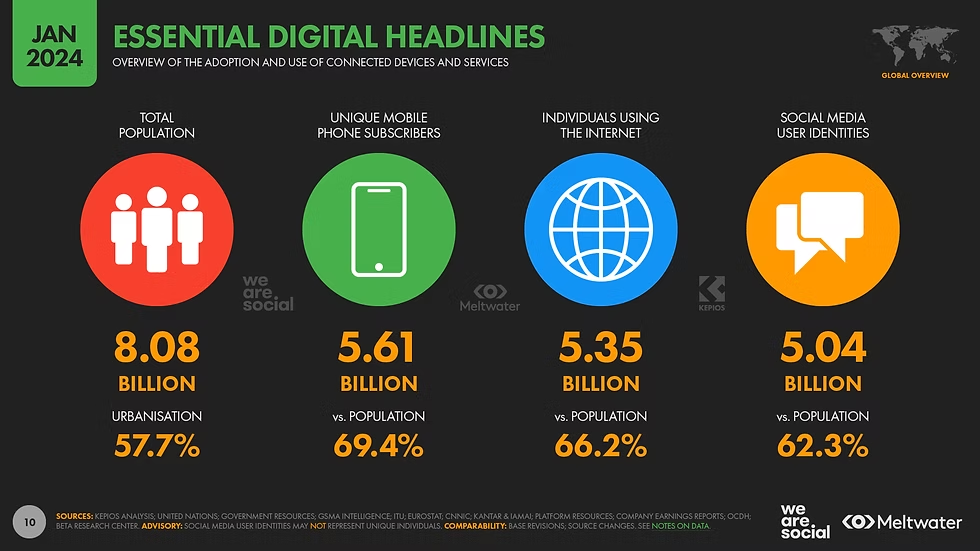
Recent statistics reveal a stark reality: approximately 3.6 billion people worldwide lack internet access, with children and young adults constituting a significant portion of this population. This digital exclusion directly impacts educational outcomes, career prospects, and economic mobility. Students without adequate technology access face disadvantages in completing homework, conducting research, developing digital literacy skills, and participating in increasingly common online learning environments.
The COVID-19 pandemic dramatically exposed these inequalities, forcing educational institutions globally to shift to remote learning almost overnight. While some students seamlessly transitioned to virtual classrooms with personal devices and reliable internet connections, countless others found themselves completely cut off from educational opportunities. This unprecedented disruption highlighted how technology equity isn’t merely a convenience but an essential requirement for educational continuity.
💡 The Multifaceted Nature of Tech Equity
Tech equity in education extends far beyond simply providing devices and internet connections. True equity encompasses several critical dimensions that work together to create meaningful access to digital learning opportunities.
Hardware and Infrastructure Access
The foundation of digital equity begins with physical access to technology. Students need reliable devices—whether computers, tablets, or smartphones—that can support educational software and applications. However, hardware alone proves insufficient without robust internet infrastructure capable of supporting bandwidth-intensive educational activities like video conferencing, streaming educational content, and accessing cloud-based learning platforms.
In rural and remote areas, internet infrastructure often remains underdeveloped or entirely absent. Even when connections exist, they frequently suffer from slow speeds, unreliable service, and prohibitive costs that place them beyond reach for low-income families. Urban areas aren’t immune to these challenges either, as economically disadvantaged neighborhoods often experience similar connectivity gaps despite being surrounded by digital abundance.
Digital Literacy and Skills Development
Providing technology without accompanying digital literacy training creates new barriers rather than removing existing ones. Students, teachers, and parents all require appropriate training to effectively utilize educational technology. Digital literacy encompasses understanding how to operate devices, navigate software, evaluate online information critically, practice internet safety, and leverage technology for learning and creativity.
Teachers particularly need ongoing professional development to integrate technology meaningfully into their pedagogy. Without proper training, even well-intentioned technology initiatives can fail to improve learning outcomes or, worse, widen existing achievement gaps.
Culturally Relevant Content
Educational technology must reflect the diverse cultures, languages, and contexts of learners worldwide. Content developed primarily for Western, English-speaking audiences often fails to resonate with students from different cultural backgrounds. Tech equity demands that digital educational resources be available in multiple languages, incorporate diverse perspectives, and address the specific needs and interests of varied student populations.
🚀 Innovative Solutions Bridging the Gap
Organizations, governments, and technology companies worldwide are implementing creative solutions to address the digital divide and promote tech equity in education. These initiatives demonstrate that with commitment and innovation, meaningful progress is achievable.
Community-Based Technology Centers
Public libraries, community centers, and schools increasingly serve as technology hubs providing free internet access, devices, and digital literacy training. These spaces create safe, supervised environments where students can complete homework, access educational resources, and develop technology skills regardless of their home circumstances.
Mobile technology labs mounted in vehicles bring digital learning opportunities directly to underserved communities, particularly in rural areas where establishing permanent infrastructure proves economically challenging. These mobile solutions offer flexibility and adaptability, meeting communities where they are.
Low-Cost Device Programs
Several initiatives focus on providing affordable computing devices specifically designed for educational purposes. Programs like One Laptop Per Child pioneered efforts to create rugged, low-cost laptops suitable for challenging environments. More recently, tablet and Chromebook distribution programs have made personal computing devices accessible to millions of students who previously lacked them.
Device refurbishment programs also play crucial roles, collecting used technology from corporations and individuals, refurbishing it to educational standards, and distributing it to schools and students in need. These initiatives simultaneously address e-waste concerns while expanding technology access.
Innovative Connectivity Solutions
Traditional internet infrastructure isn’t always practical or affordable in remote or economically disadvantaged areas. Alternative connectivity solutions are emerging to address these challenges. Television white space technology utilizes unused broadcasting frequencies to deliver internet access over long distances. Satellite internet initiatives, including low-earth orbit satellite networks, promise to bring connectivity to even the most isolated regions.
Mesh networks create community-based internet infrastructure where devices connect to each other, creating local networks that can function independently or connect to broader internet access points. These solutions prove particularly valuable in areas where centralized infrastructure development remains economically unviable.
Educational Technology Apps and Platforms
Digital learning platforms designed for low-bandwidth environments enable students to access quality educational content even with limited connectivity. Offline-capable applications allow students to download lessons, complete assignments, and sync progress when connectivity becomes available.
Adaptive learning platforms use artificial intelligence to personalize educational experiences, meeting students at their current skill levels and providing targeted instruction. These platforms prove particularly valuable in under-resourced classrooms where teachers manage large student-to-teacher ratios and diverse skill levels.
📊 Measuring Impact and Progress
Effective tech equity initiatives require careful monitoring and evaluation to ensure they achieve intended outcomes and inform future efforts. Several key metrics help stakeholders assess progress toward bridging the digital divide.
| Metric Category | Key Indicators | Why It Matters |
|---|---|---|
| Access | Device ownership rates, internet connectivity speeds, usage hours | Determines baseline availability of technology resources |
| Skills | Digital literacy assessment scores, teacher training completion rates | Measures ability to effectively use available technology |
| Outcomes | Academic achievement, graduation rates, college enrollment | Evaluates real-world impact on educational success |
| Equity | Achievement gap trends, participation rates by demographic groups | Ensures interventions benefit underserved populations |
Regular data collection and analysis allow educators and policymakers to identify which interventions prove most effective, where additional resources are needed, and how programs can be refined to maximize impact. Transparency in reporting outcomes builds stakeholder confidence and attracts ongoing support for tech equity initiatives.
🤝 The Role of Public-Private Partnerships
Addressing the digital divide requires collaboration between governments, private sector companies, nonprofit organizations, and educational institutions. Each stakeholder brings unique resources, expertise, and perspectives essential for comprehensive solutions.
Governments provide policy frameworks, funding, and infrastructure development that create foundations for technology access. Regulatory policies that promote competition among internet service providers can drive down costs and improve service quality. Public funding for educational technology ensures that underserved schools receive necessary resources regardless of local property tax revenues.
Technology companies contribute hardware, software, technical expertise, and sometimes direct funding for educational initiatives. Major corporations have launched programs providing free or discounted devices, cloud services, and educational platforms to qualifying schools and students. Their involvement brings cutting-edge technology and innovation to educational contexts.
Nonprofit organizations often serve as crucial intermediaries, implementing programs, providing training, and advocating for underserved communities. Their grassroots connections and mission-driven approaches ensure that initiatives remain focused on equity outcomes rather than purely commercial interests.
🌟 Success Stories from Around the Globe
Numerous inspiring examples demonstrate how targeted tech equity initiatives transform educational opportunities and student outcomes worldwide.
Rwanda’s Digital Ambitions
Rwanda has made remarkable progress in educational technology despite being one of Africa’s smallest and least developed nations. The government’s commitment to becoming a knowledge-based economy drove massive investments in digital infrastructure and education. Nationwide fiber optic networks now reach remote areas, while computer labs and teacher training programs have expanded dramatically. Student performance in STEM subjects has improved significantly as technology integration has deepened.
India’s Digital India Initiative
India’s ambitious Digital India program aims to transform the country into a digitally empowered society. The education component focuses on providing digital infrastructure to schools, developing digital learning resources in regional languages, and training teachers in technology integration. Despite enormous challenges given India’s size and diversity, millions of students have gained technology access through these coordinated efforts.
Uruguay’s Plan Ceibal
Uruguay became the first country to provide a laptop to every public school student through Plan Ceibal, launched in 2007. This comprehensive program included device distribution, teacher training, educational software development, and internet infrastructure expansion. Long-term studies show significant improvements in digital literacy, student engagement, and reduced educational inequality.
⚡ Overcoming Persistent Challenges
Despite progress, significant obstacles continue hindering tech equity in global education. Addressing these challenges requires sustained commitment, innovative thinking, and willingness to adapt approaches based on evidence and changing circumstances.
Sustainability Concerns
Many technology initiatives in education struggle with long-term sustainability. Initial enthusiasm and funding often give way to maintenance challenges, outdated equipment, and discontinued support. Building sustainable programs requires planning for ongoing costs including device replacement, software updates, technical support, and teacher training refreshers.
Resistance to Change
Educational institutions naturally resist dramatic changes to established practices. Some teachers feel threatened by technology or question its educational value. Parents may harbor concerns about screen time, online safety, or whether technology genuinely improves learning. Addressing these concerns requires ongoing communication, evidence-based advocacy, and inclusive implementation processes that respect stakeholder perspectives.
Digital Divide Within Divide
Even as basic technology access expands, new divides emerge around quality of access, advanced digital skills, and opportunities to use technology creatively rather than just consuming content. Ensuring equity requires addressing these more nuanced disparities, not just initial access gaps.
🔮 The Path Forward: Building Truly Equitable Digital Education
Achieving genuine tech equity in global education demands sustained, multifaceted efforts addressing immediate access gaps while building foundations for long-term transformation. Several priorities should guide future initiatives.
- Universal basic connectivity as a human right, with policies and investments ensuring all students can access high-speed internet regardless of location or economic circumstances
- Comprehensive digital literacy curricula integrated throughout education systems, preparing students not just to use technology but to think critically about it
- Culturally responsive educational technology development involving diverse communities in design processes to ensure relevance and appropriateness
- Teacher empowerment through ongoing professional development, supportive policies, and recognition of technology integration as valuable professional skill
- Evidence-based decision making using rigorous research and data to guide investments and program designs
- Sustainable funding models that ensure long-term program viability rather than short-term pilot projects
🎯 Empowering the Next Generation
The digital divide represents one of the defining challenges of our era, with profound implications for educational equity, economic opportunity, and social justice. Technology offers unprecedented potential to democratize education, providing quality learning experiences to students regardless of geography, economic circumstances, or other traditional barriers.
However, technology alone cannot solve educational inequities. Devices and internet connections prove meaningless without thoughtful pedagogy, culturally relevant content, skilled educators, and supportive communities. True tech equity requires holistic approaches addressing multiple dimensions of access, skills, content, and outcomes.
The urgency of bridging the digital divide has never been clearer. As education increasingly relies on digital platforms and as digital literacy becomes essential for economic participation, students without adequate technology access face compounding disadvantages that threaten their futures. Conversely, successful tech equity initiatives demonstrate transformative potential—improving learning outcomes, increasing engagement, and opening doors to opportunities previously beyond reach.
Achieving global tech equity in education requires unprecedented collaboration among governments, private sector actors, nonprofit organizations, educators, and communities. It demands sustained financial investment, policy innovation, technical creativity, and unwavering commitment to equity principles. The challenge is enormous, but the stakes couldn’t be higher. Every student deserves the opportunity to develop their full potential, and in our increasingly digital world, that means ensuring universal access to quality educational technology.
The journey toward truly equitable digital education continues, with progress measured not in devices distributed or networks deployed, but in lives transformed and futures brightened. By empowering minds worldwide through thoughtful, inclusive technology integration, we can build a more equitable, prosperous, and connected global society where every child has the tools and opportunities they need to thrive in the 21st century.